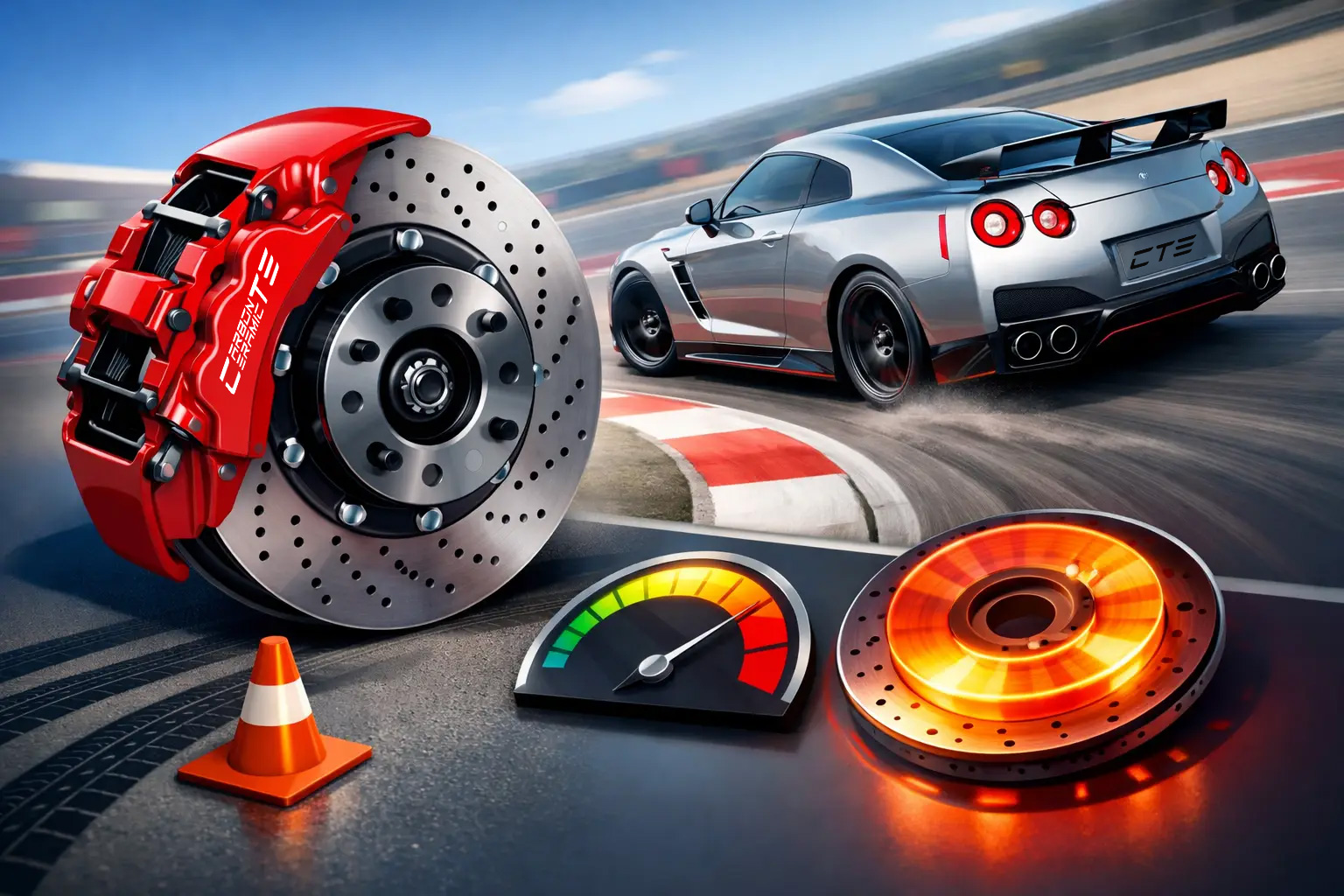
At the end of a fast straight, a Nissan GT-R does not need vague promises about performance. It needs a brake system that responds with the same authority on lap eight as it did on lap one. Nissan GT-R track brake results matter because this platform carries serious speed, serious weight, and enough power to expose a marginal braking setup quickly. A long pedal, a fading bite point, or rotor distress is more than an inconvenience - it is a limit on driver confidence and a direct safety concern.
What Nissan GT-R Track Brake Results Should Measure
A single 60-0 mph stopping figure does not tell the full story. The GT-R's real brake test begins under repeated high-energy deceleration, when rotor temperatures rise, pad compounds approach their operating limits, and fluid, caliper, hub, and suspension components are all working under load.
Meaningful track results should show consistent pedal feel, repeatable braking points, predictable modulation, and stable deceleration over a session. The driver should not need to brake earlier every lap because the system is losing torque. Nor should the setup produce vibration, taper wear, cracking, or a pedal that changes character as heat builds.
For performance workshops and distributors, that distinction is critical. A kit can look impressive behind the wheel while still being poorly matched to the vehicle's mass, tire grip, intended track use, or thermal demand. Engineering should be evaluated by what happens after repeated threshold-braking events, not by appearance alone.
Nissan GT-R Track Brake Results: Where the Gains Come From
Thermal capacity protects braking consistency
The R35 GT-R can generate exceptional speeds in a short distance. Each braking event converts that kinetic energy into heat, and the brake system must absorb and release it without exceeding the useful operating range of the rotor, pad, fluid, or caliper seals.
A larger effective rotor diameter increases leverage at the wheel. Greater rotor mass can absorb more heat, while optimized internal construction helps move heat away from the friction surfaces. Carbon ceramic rotors add another consideration: their material properties can provide substantial thermal resistance and a meaningful reduction in unsprung and rotating mass when engineered as a complete vehicle-specific system.
Lower unsprung mass is not simply a specification-sheet benefit. It can support suspension response over curbing, bumps, and surface changes, helping the tire maintain contact with the track. On a GT-R, where front-end load rises sharply under braking, that stability can influence both confidence and usable braking performance.
Pad behavior determines the pedal the driver feels
Rotor technology cannot compensate for an unsuitable pad compound. The pad must generate reliable friction at track temperatures, resist fade, and release cleanly enough to avoid excessive drag or uneven material transfer. A strong initial bite may feel impressive in the paddock, but an overly aggressive compound can make modulation difficult and increase the chance of upsetting the chassis at turn-in.
The best result depends on how the car is used. A street-driven GT-R that sees occasional track days may require a different friction profile than a dedicated time-attack or endurance car. Cold response, noise, dust, wear rate, rotor compatibility, and the driver's preferred pedal character all matter. There is no credible one-compound answer for every GT-R owner.
Caliper stiffness turns pressure into control
A racing-grade monobloc caliper is designed to resist flex when hydraulic pressure rises. Less caliper deflection supports a firmer, more repeatable pedal and helps distribute clamping force across the pad face. Proper piston sizing also matters because it affects brake bias, pedal travel, and the relationship between front and rear braking torque.
The GT-R's all-wheel-drive system and chassis electronics do not remove the need for correct brake balance. An improperly configured front upgrade can alter the vehicle's behavior under heavy braking, trigger intervention sooner, or leave rear capacity underused. A complete kit should be engineered around the vehicle, not assembled from unrelated parts.
The Track Conditions Behind Every Result
Brake performance data without context can mislead buyers. Ambient temperature, track length, elevation change, tire compound, vehicle weight, driver technique, and session duration can all change the outcome. A GT-R on high-grip track tires with upgraded power and aero will place far more demand on its brakes than a lightly modified street car on conventional performance tires.
A useful test record identifies the starting and peak conditions, the number of hard stops or laps completed, and any changes in pedal travel or stopping point. It should also document rotor and pad condition after the session. Consistency is the central question: did braking remain controllable as the system became hot?
Drivers should be cautious with claims based solely on cold stopping distances. Modern GT-R braking systems can already produce strong one-stop numbers when tires and pavement are favorable. The practical value of a performance brake upgrade is often found in the fifth, tenth, or twentieth heavy stop, when heat management separates a track-capable system from a road-focused one.
Why Complete-System Engineering Matters
The rotor, caliper, pad, bracket, brake line, hardware, and hub interface operate as one system. A high-quality rotor paired with a poorly machined bracket, incorrect offset, weak hardware, or inadequate pad support can compromise the entire installation. Fitment accuracy is a safety requirement, especially where wheel clearance, caliper-to-spoke distance, and rotor centering are tight.
For distributors and workshops, manufacturer control over production reduces avoidable risk. CCYS completes 90% of production in-house, combining R&D, precision machining, and quality management to maintain control over system consistency. IATF 16949 and ISO 9001 standards support the process discipline that performance-brake buyers expect when supplying premium and high-speed vehicle platforms.
This is particularly relevant for carbon ceramic systems. The disc material, hat design, mounting method, pad formulation, and caliper geometry must be matched carefully. A carbon ceramic conversion is not merely a weight-saving exercise. It is an engineered thermal and mechanical package that must retain stable performance while managing expansion, load, and friction at track temperature.
How to Read a GT-R Brake Upgrade After a Track Day
The most useful post-session inspection starts before components cool completely, but it must always be performed safely. Check whether the pedal remained firm and whether the driver had to alter braking markers. Look for uneven pad wear, abnormal rotor surface changes, fluid discoloration, leaks, loose hardware, or signs of contact between the caliper and wheel.
A stable rotor surface and even pad wear generally indicate that the friction pair is working correctly. Light surface marks may be normal depending on the material and operating conditions, while deep scoring, deposits, cracks, or severe discoloration deserve technical review. Carbon ceramic discs require appropriate inspection criteria; they should not be judged by assumptions carried over from conventional iron rotors.
Also review vehicle setup. Excessive front dive, worn control-arm bushings, weak stabilizer links, incorrect alignment, or inconsistent tire pressures can make a brake problem appear worse than it is. Brakes create the stopping force, but the chassis and tire must transmit that force to the pavement.
Selecting the Right Result for the Customer
The best Nissan GT-R track brake results are not necessarily the most aggressive on a marketing chart. The right result is a system that matches the car's actual energy load, wheel package, tire level, driver experience, and service expectations. A track-day customer may prioritize low maintenance, reduced unsprung weight, and dependable repeatability. A competition customer may accept higher inspection frequency in exchange for maximum thermal headroom and response.
Choose a complete, vehicle-specific system with documented fitment, appropriate pad support, quality-controlled hardware, and technical backing from the manufacturer. Then validate it in the environment that matters: repeated hard braking at real GT-R speeds. When the pedal remains precise at the end of the session, the driver can focus on the next braking marker instead of wondering whether the system will be there.