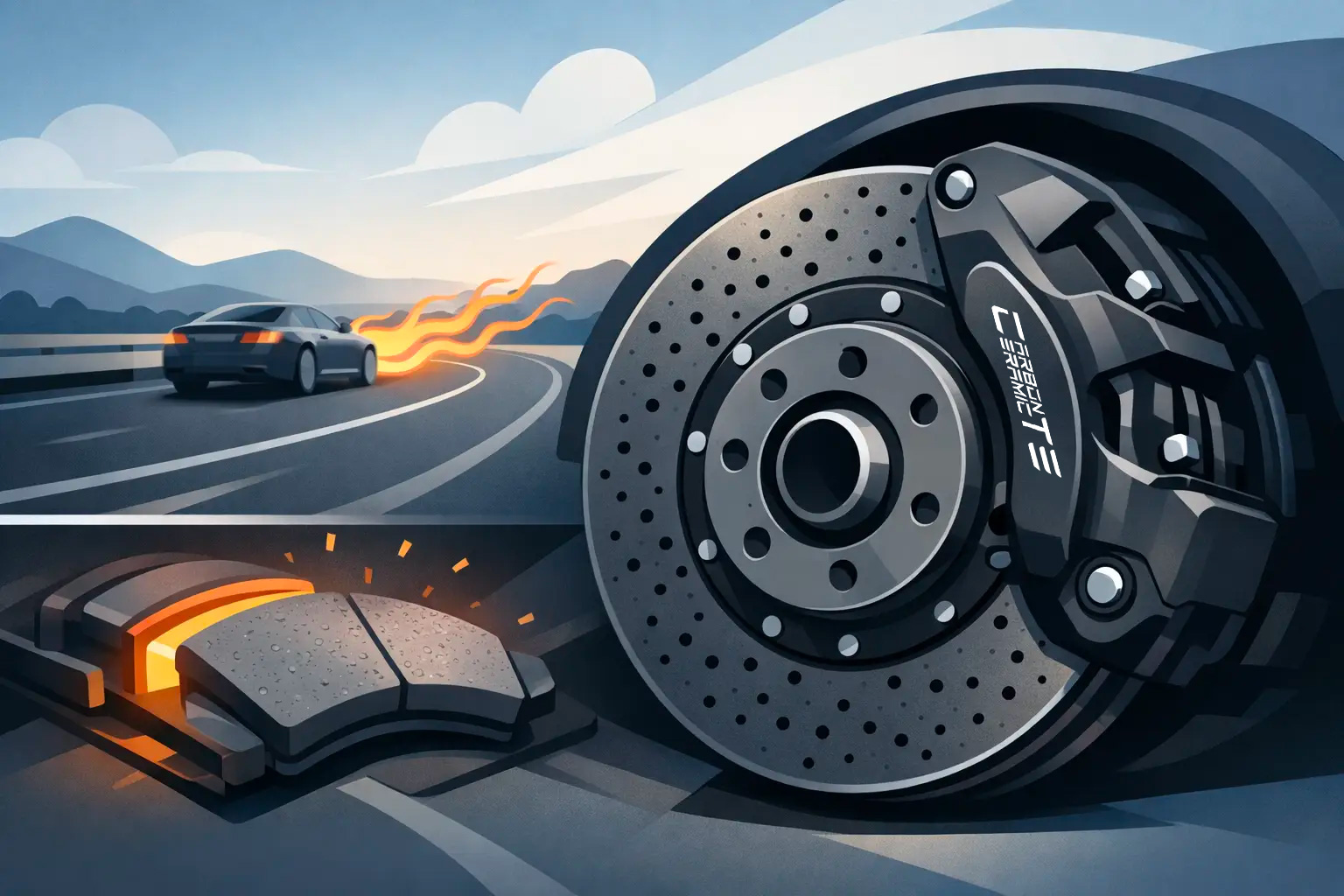
A brake pedal can feel firm in the shop and still become unpredictable when the system sees real heat. That is the risk of installing premium brakes without properly bedding carbon ceramic brake pads. The pads, rotors, calipers, brake fluid, tires, and driver technique work as one system. If the friction surfaces are not conditioned correctly, the result can be uneven transfer layers, vibration, inconsistent bite, noise, and reduced confidence when braking zones get serious.
For performance workshops, distributors, and drivers upgrading Porsche, Tesla, BMW, Nissan GT-R, Toyota Supra, Jaguar, Land Rover, Defender, and supercar platforms, bedding is not a cosmetic final step. It is part of putting a carbon ceramic braking system into service. A disciplined procedure protects the investment in racing-grade hardware and establishes the stable friction characteristics expected from a thermal-resistant brake package.
Why Bedding Carbon Ceramic Brake Pads Matters
Bedding creates a controlled transfer layer between the brake pad and the carbon ceramic rotor. During the early heat cycles, a small and even amount of pad material is deposited across the rotor's friction surface. Once this layer is established, braking occurs through a stable interaction between compatible friction materials rather than through direct, inconsistent abrasion alone.
This is especially important with carbon ceramic rotors. Their structure, thermal behavior, and surface requirements differ from cast-iron discs. Carbon ceramic systems are engineered to operate with pads formulated for their specific rotor material and temperature range. Using an incorrect compound, mixing pad types, or applying an aggressive bedding routine copied from an iron-rotor race setup can damage performance rather than improve it.
An incomplete or uneven transfer layer may feel like a warped rotor, even when the rotor is not physically distorted. Drivers may notice pedal pulsation, steering-wheel vibration under braking, hot spots, squeal, or a brake response that changes from one stop to the next. These symptoms often point to surface condition, pad deposits, installation errors, or excessive thermal stress - not automatically to a failed carbon ceramic disc.
Start With a System That Is Ready for Heat
Bedding should begin only after the brake system has passed a basic installation and safety inspection. A high-performance pad cannot compensate for a sticking caliper, contaminated rotor, poor fluid condition, incorrect torque, or wheel interference.
Confirm that the carbon ceramic rotors are clean, dry, and free of grease, brake fluid, fingerprints, packaging residue, and old pad deposits. Use only a suitable brake cleaner and a clean, lint-free cloth. Do not sand, machine, or use abrasive resurfacing methods on carbon ceramic rotor faces unless the rotor manufacturer specifically directs it. Carbon ceramic discs require different handling from conventional iron rotors.
Inspect pad fitment in the caliper and verify that backing plates, shims, anti-rattle hardware, retaining pins, and sensors are correctly installed. The pads must move freely in their guides without binding. Check caliper mounting hardware and wheel fasteners against the vehicle or brake-kit torque specifications. Confirm sufficient wheel clearance, particularly on big-brake conversions where spoke shape, barrel clearance, and wheel weights can affect caliper space.
Brake fluid deserves equal attention. Old fluid with absorbed moisture lowers the system's boiling resistance and can produce a long pedal during demanding bedding stops. For track-oriented vehicles and high-output street builds, use a fluid specification appropriate to expected operating temperatures and service it at the correct interval. Bedding pads on compromised fluid can mask the actual cause of poor brake feel.
The Correct Bedding Procedure for Carbon Ceramic Pads
The exact procedure should always come from the brake-system manufacturer because pad compounds, vehicle mass, tire grip, rotor size, and intended use all influence the heat cycle. A street-driven Tesla sedan does not require the same process as a GT-R prepared for repeated track sessions. Still, the principles remain consistent: bring the brakes up to temperature progressively, apply controlled deceleration, avoid abrupt thermal shock, and allow the system to cool without holding the pads against hot rotors.
Begin in a safe, legal area with clear road conditions and enough space to decelerate repeatedly. Avoid public-road bedding if local traffic, speed limits, weather, or road surface make controlled braking unsafe. A closed course, test road, or professional workshop environment is the right choice for aggressive applications.
Make several moderate decelerations from a legal road speed down to a low rolling speed. Do not activate ABS if it can be avoided, and do not come to a complete stop with firm pedal pressure. The goal is to warm the system evenly, not to generate maximum brake temperature on the first application.
As brake response becomes more consistent, perform a series of firmer decelerations with increasing pedal pressure. Maintain enough rolling speed between stops to let air move through the rotors and calipers. Do not drag the brakes for long periods, and do not make one emergency-style stop followed immediately by parking. Excessive heat concentrated in one area can create uneven deposits or thermal stress before the transfer layer has stabilized.
After the final stop, drive at a steady pace with minimal braking to cool the system gradually. Park only once the brakes have cooled sufficiently. If possible, do not hold the vehicle stationary with the brake pedal applied immediately after a high-temperature bedding cycle. Use Park on an automatic transmission or select a gear on a manual transmission where conditions permit, while following normal vehicle safety practices.
A sharp odor and light smoke can occur during initial bedding, especially with performance pad compounds. That does not automatically indicate a problem. Heavy, persistent smoke, visible fluid leakage, grinding, severe vibration, a pulling condition, warning lights, or a soft pedal requires immediate inspection. Stop the procedure and identify the cause before further driving.
What Drivers Should Feel After Bedding
A properly bedded carbon ceramic system should deliver predictable pedal response and repeatable deceleration. Initial cold bite varies by pad compound, ambient temperature, and vehicle calibration, so a driver should not expect every carbon ceramic setup to feel identical at the first touch of the pedal. The objective is consistency as temperature rises, not an artificially aggressive pedal that becomes unstable during repeated use.
The steering wheel should remain calm under braking, and the vehicle should track straight when suspension alignment, tire condition, and road surface are sound. Some performance pads may produce modest noise in low-speed operation, particularly when cold. Noise alone does not prove that bedding failed. What matters is whether the sound is persistent, accompanied by vibration or reduced performance, and traceable to the brake system rather than wheel bearings, suspension joints, or loose hardware.
Common Mistakes That Shorten Brake Life
The most expensive mistake is treating carbon ceramic brakes like ordinary replacement parts. A carbon ceramic rotor should not be paired with an unknown pad formulation just because the pad shape fits the caliper. Friction compatibility is an engineering requirement. The wrong compound can accelerate wear, affect pedal behavior, create unwanted deposits, and compromise the rotor surface.
Another frequent error is bedding new pads on used rotors without first confirming that the rotor surface is suitable. If the previous pad compound left an inconsistent transfer layer, the new pads may inherit the problem. Follow the system manufacturer's guidance before changing compounds or servicing worn pads. In some cases, inspection and professional evaluation are necessary rather than a simple pad swap.
Overheating is equally damaging. Drivers sometimes believe carbon ceramic hardware is immune to abuse because it is associated with supercars and motorsport. Carbon ceramic systems offer major advantages in heat resistance, weight reduction, and repeated braking performance, but every system has operating limits. Extended brake dragging, poor cooling airflow, overloaded vehicle use, incorrect pad selection, or repeated high-energy stops without recovery time can still create problems.
Avoid pressure washing hot rotors and do not apply chemicals or dressings near the friction surfaces. Sudden cooling and contamination are unnecessary risks. During wheel service, technicians should also prevent wheel weights, tools, and loose debris from contacting the rotor or caliper.
Match the Bedding Process to the Complete Brake Package
The strongest result comes from treating pad bedding as part of complete brake-system engineering. Rotor diameter and thickness, caliper stiffness, piston sizing, pad area, brake-line condition, fluid specification, wheel airflow, vehicle weight, and tire grip all influence how the system builds and manages heat.
This is why vehicle-specific kits and manufacturer support matter. A properly engineered package is designed around the platform's mounting points, wheel clearance, operating demands, and brake balance. For workshops, this reduces installation uncertainty and gives customers a more predictable result than assembling unrelated components from multiple sources.
CCYS produces carbon ceramic brake systems with 90% of manufacturing completed in-house, supporting control over machining, fitment, quality management, and system consistency. That manufacturing discipline matters when a customer expects a lightweight, high-temperature brake solution to perform under repeated demand, not merely look impressive behind the wheel.
Before releasing any vehicle after installation, document the bedding guidance with the customer. Explain the initial driving restrictions, expected sensations, and warning signs that require a return inspection. A few clear instructions at handover can prevent avoidable rotor damage and protect the reputation of both the workshop and the brake supplier.
Carbon ceramic brakes reward precise setup and disciplined use. Give the pads and rotors the heat cycle they were engineered for, then let the system prove its value where it counts: at the pedal, at speed, and under pressure.