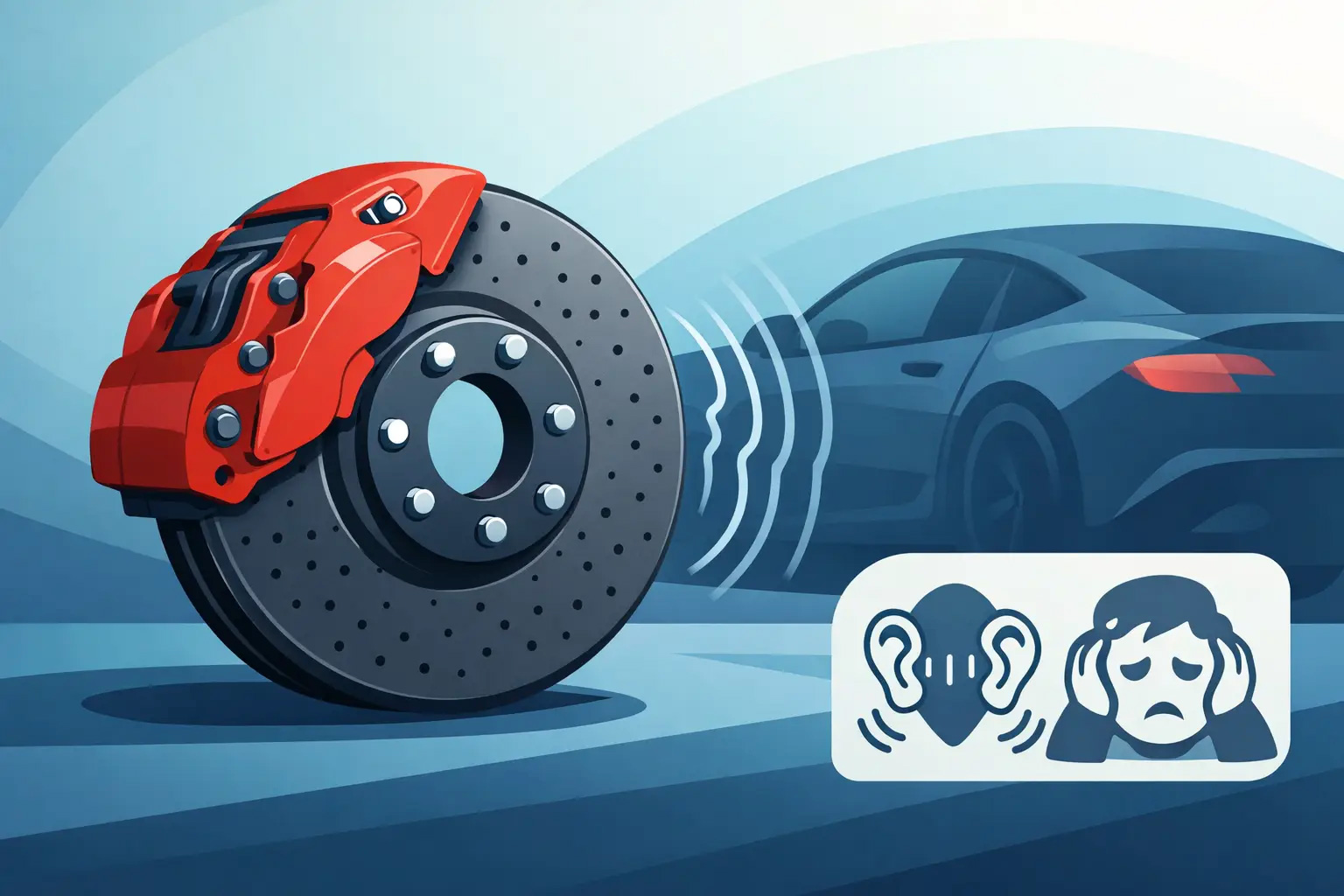
A brake squeal can make even a premium performance car feel wrong. When stopping power is the reason you upgraded, a sharp noise at low speed may raise an immediate question: do carbon ceramic brakes squeal? They can, particularly when cold, lightly loaded, or paired with aggressive friction materials. But noise should never be dismissed automatically. The difference between normal operating behavior and a brake-system issue comes down to when the sound occurs, how the system was installed, and whether braking performance has changed.
Carbon ceramic brakes are engineered for high heat capacity, low unsprung weight, and repeatable stopping force under demanding conditions. Those strengths do not guarantee silent operation. Racing-grade brake systems prioritize stable friction and thermal resistance over the whisper-quiet manners expected from a commuter-focused iron rotor and soft organic pad combination.
Why Do Carbon Ceramic Brakes Squeal?
Brake squeal is vibration. As the pad contacts the rotor, the friction interface can create high-frequency vibration that travels through the pad, caliper, mounting hardware, and suspension components. The result is the familiar high-pitched sound heard most often during gentle stops.
With carbon ceramic systems, the pad compound plays a major role. Performance pads are commonly formulated to remain stable at temperatures that would reduce the effectiveness of ordinary street pads. That material can feel and sound different during low-temperature, low-pressure driving. A pad that delivers confident response during repeated high-speed braking may be more vocal while maneuvering through a parking garage.
The rotor surface matters as well. Carbon ceramic discs use a carbon fiber-reinforced silicon carbide structure rather than conventional cast iron. Their friction characteristics, heat behavior, and surface interaction with the pad are fundamentally different. The system must be designed as a matched package: rotor, pad, caliper, caliper bracket, hardware, brake lines, and vehicle-specific mounting geometry all affect results.
A brief squeal during the first few stops of a cold morning can be normal, especially with a high-performance pad. Noise that begins suddenly after the system was quiet, continues once warm, occurs under firm braking, or arrives with vibration, pulling, reduced pedal confidence, or warning lights requires inspection.
Normal Noise Versus a Problem That Needs Attention
The driving situation provides useful clues. Light pedal pressure at low speed is the classic condition for normal performance-brake squeal. The friction interface is operating with limited heat and limited clamping load, which can allow vibration to build. After several controlled stops, the system may quiet down as the pads and rotors reach their intended operating range.
Track-oriented systems can also make more mechanical noise than OEM street systems. Some pad compounds produce a faint scrape, hum, or intermittent squeal even when the components are healthy. This is a trade-off for high-temperature capability and strong, repeatable friction.
However, a loud grinding sound is not normal carbon ceramic behavior. Neither is a metallic scrape that changes with wheel speed when the brakes are not applied. These symptoms may indicate worn pads, loose or incorrect hardware, contact from a backing plate, a stone trapped near the disc, or an installation issue. Because carbon ceramic rotors are high-value components, continued driving without a diagnosis can turn a correctable problem into unnecessary rotor or caliper damage.
A change in pedal feel deserves the same urgency. If the pedal becomes soft, the vehicle pulls under braking, the steering wheel shakes under load, or braking distances feel longer, stop treating the issue as a noise concern. Diagnose the complete brake system before returning the vehicle to hard driving, track use, or repeated high-speed stops.
Common Causes of Excessive Squeal
Incorrect bedding is among the most common causes. Bedding transfers a controlled layer of pad material onto the rotor face. This transfer layer helps create consistent friction. If the process is rushed, interrupted, or performed with repeated hard stops before the components reach the correct temperature, uneven material deposits can develop. The driver may then hear squeal, feel pulsation, or experience inconsistent bite.
Pad glazing is another frequent issue. This occurs when the pad surface becomes overly smooth or heat-affected, often after improper break-in, prolonged light braking, or a mismatch between pad compound and use case. A glazed pad may squeal and lose the progressive feel expected from a properly prepared performance system.
Contamination can create similar symptoms. Wheel cleaners, lubricants, grease, road debris, or fluid leaks can alter the friction surface. Never apply lubricants to the pad face or rotor surface. Anti-squeal products and approved brake lubricant belong only on specified non-friction contact points, and only when the brake manufacturer calls for them.
Poor fitment can be equally damaging. A carbon ceramic conversion must maintain correct caliper centering, rotor offset, pad sweep, fastener torque, wheel clearance, and brake-line routing. A kit assembled from mismatched components may stop the vehicle, but it may not operate quietly, wear evenly, or maintain safe clearances through suspension travel and heat cycles.
How to Reduce Carbon Ceramic Brake Squeal
Start with the pad selection. There is no universal “best” pad for every carbon ceramic rotor. A daily-driven Porsche, Tesla, BMW, Jaguar, Land Rover, Toyota Supra, Nissan GT-R, Defender, or supercar may need a street-performance compound with low-temperature bite and controlled noise characteristics. A vehicle that sees frequent track sessions may justify a more aggressive compound, with the owner accepting greater noise and dust as part of the performance equation.
Next, follow the bedding procedure supplied for the exact rotor and pad combination. Bedding is not simply a series of panic stops. It is a controlled heat cycle that establishes the friction layer without overheating the brakes or bringing the vehicle to a stop with hot pads clamped against a hot rotor. If the system was installed by a workshop, the technician should provide the procedure and confirm that the brakes have been bedded before evaluating noise.
Inspect the installation with the same discipline used for engine or suspension work. Confirm that pads move freely in their guides, retaining pins and springs are correctly seated, shims are installed where specified, and caliper bolts are torqued to the approved value. Check rotor direction, rotor-to-caliper alignment, wheel clearance, and dust-shield clearance. A minor contact point can create a major noise complaint.
Keep the friction surfaces clean. Use cleaning products compatible with the brake system and avoid directing aggressive chemicals at hot rotors, pads, seals, and caliper finishes. After wet driving or washing, a light surface film can create temporary noise. Several normal, controlled brake applications usually clear it. Persistent noise after the system is dry is a reason to inspect rather than spray on a quick fix.
Do not machine or resurface a carbon ceramic rotor as if it were a conventional iron disc. Carbon ceramic components have specific wear limits, inspection criteria, and service requirements. Any evaluation should include rotor thickness and condition, surface integrity, pad wear, hardware condition, and the full history of heat exposure and use.
Carbon Ceramic Brake Noise Is a System Question
When customers ask whether carbon ceramic brakes squeal, the most accurate answer is: sometimes, and the reason matters. A short cold squeal from a properly fitted, track-capable system can be an acceptable compromise. Repeated or worsening noise from a premium brake package is not something to normalize without inspection.
The best way to control noise begins before installation. Choose a vehicle-specific system from a manufacturer that controls material selection, machining, caliper design, and quality verification. CCYS produces 90% of its braking components in-house and applies IATF 16949 and ISO 9001 quality systems to support consistent fitment and performance across demanding aftermarket applications.
For workshops and distributors, that system-level approach protects more than customer satisfaction. It helps prevent avoidable comebacks caused by incompatible pads, incorrect brackets, poor rotor alignment, or incomplete hardware. For drivers, it means the brake upgrade can deliver what it was purchased for: firm, repeatable stopping confidence when heat, speed, and vehicle weight place real demands on the system.
If the brakes squeal but pedal feel is strong and the sound fades as temperatures rise, document the conditions and monitor the pattern. If the noise persists, changes, or appears alongside vibration or reduced performance, inspect the system before the next hard stop. A carbon ceramic brake system should make a statement through controlled stopping power, not unanswered mechanical noise.