

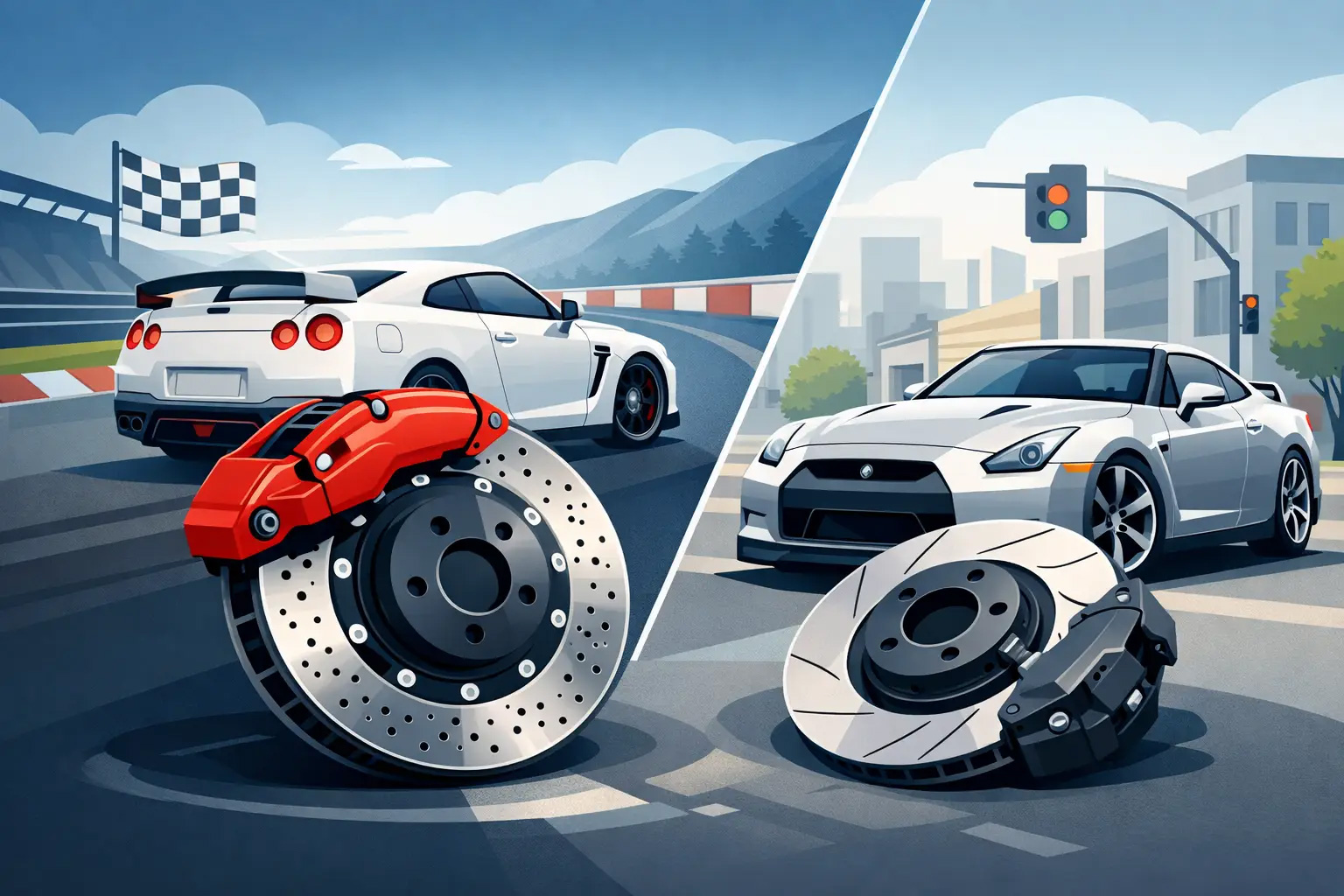
A Nissan GT-R can reach serious speed with startling ease. The problem starts when the next braking zone arrives and the pedal goes longer, the brakes lose consistency, or the factory system cannot shed enough heat after repeated hard stops. The best GT-R brake systems are not chosen by caliper size alone. They are selected around thermal capacity, vehicle-specific fitment, rotor mass, pad behavior, wheel clearance, and the way the car is actually driven.
For a street-driven R35 that sees occasional aggressive runs, a well-engineered performance kit can sharpen response and improve confidence without making daily operation unpleasant. For a heavier, higher-power GT-R used at track days, repeated high-speed deceleration creates a much tougher requirement: stable pedal feel, controlled temperatures, predictable friction, and components that remain reliable session after session.
What Separates the Best GT-R Brake Systems
A brake upgrade should solve a measurable limitation. On a GT-R, that limitation is rarely one dramatic emergency stop. Tires and road surface heavily influence single-stop distance. The larger advantage of a properly matched braking system is repeatability. It should provide the same controlled response in the fifth hard braking zone as it did in the first.
Rotor design is central to that result. Larger effective rotor diameter increases leverage at the wheel, while greater thermal mass helps absorb energy. Two-piece rotors can reduce weight at the outer edge of the assembly and allow the friction ring and hat to manage heat expansion more effectively. Rotor vane design also matters because internal airflow determines how efficiently heat leaves the disc between braking events.
Calipers must do more than look substantial behind a wheel. A rigid monobloc caliper resists deflection under pressure, helping drivers maintain a firm and consistent pedal. Proper piston sizing and pad-area distribution are equally important. They influence pressure across the pad face, wear pattern, brake balance, and compatibility with the GT-R's ABS and vehicle dynamics systems.
The strongest system is therefore a complete engineering package, not a collection of oversized parts. Rotor, caliper, bracket, pad, lines, hardware, and fitment should be developed to work together on the R35 platform.
Carbon Ceramic vs. Iron for GT-R Use
Carbon ceramic braking systems are often the right choice for GT-R owners who prioritize lower unsprung weight, corrosion resistance, thermal resistance, and long-term high-performance operation. Reducing rotating mass can improve steering response and suspension control, especially on a heavy, powerful all-wheel-drive platform. Carbon ceramic rotors also handle high temperatures without the same tendency toward oxidation seen in conventional iron discs.
That does not make carbon ceramic the automatic answer for every GT-R. An iron rotor system can be a practical option for drivers running frequent track events where consumable cost, pad availability, and quick rotor replacement are the main priorities. Iron systems also offer broad pad-compound choices for specific track surfaces, tire packages, and temperature ranges.
The decision depends on duty cycle. A GT-R built for premium street performance, high-speed road use, occasional circuit work, or a lightweight-focused build can benefit substantially from a carbon ceramic kit. A dedicated track car may still favor iron if the team expects extremely high consumable turnover and has already developed its maintenance program around conventional race hardware.
Brake pads must match the rotor material. A carbon ceramic disc requires a compatible pad compound engineered for stable friction and appropriate wear behavior. Installing an aggressive generic race pad without considering disc material can create noise, uneven deposits, poor cold response, or unnecessary component wear. The best GT-R brake systems treat pad selection as part of the system, not an afterthought.
Choose Brake Capacity Around the GT-R's Real Job
A stock-power GT-R used primarily on the street does not need the same specification as a 900-horsepower car running repeated full-speed sessions. More power increases the energy that must be converted into heat. More vehicle weight, stickier tires, aerodynamic grip, and later braking points increase the load further.
For street and canyon use, prioritize a kit that delivers controlled initial bite, low noise potential, dependable cold performance, and direct pedal response. The goal is not an overly aggressive setup that makes normal braking difficult to modulate. A well-calibrated system should feel precise in traffic and reassuring when the road opens up.
For track-focused use, thermal margin becomes the priority. Look for a rotor diameter and thickness appropriate for the car's power level, wheel size, tire grip, and expected session length. High-temperature seals, rigid caliper construction, effective rotor ventilation, and a pad engineered for the intended temperature window all contribute to brake consistency.
Drag-oriented GT-Rs require their own judgment. They may produce extreme trap speeds but do not necessarily experience the repeated braking cycles of a road-course car. A system with strong high-speed stopping capacity and street reliability may be more relevant than a maximum-size circuit specification. Build decisions should follow the vehicle's actual operating conditions, not a parts list designed for someone else's GT-R.
Fitment Is a Safety Requirement, Not a Detail
A GT-R brake kit has to clear the wheel barrel and spokes, align correctly with the hub, maintain proper rotor offset, and accommodate factory electronic functions where applicable. Wheel diameter alone does not confirm clearance. Two 20-inch wheels can have completely different spoke profiles and inner-barrel dimensions.
Ask for an application-specific fitment template before committing to a large-caliper system. Confirm the required wheel diameter, wheel design clearance, rotor dimensions, front and rear axle configuration, parking brake compatibility, and sensor provisions. This is especially important on cars with aftermarket wheels, widebody conversions, hub changes, or suspension modifications.
Brake balance also deserves attention. Increasing front braking capacity without a corresponding rear-system strategy can alter the way the vehicle behaves under heavy deceleration. Modern GT-R electronics are sophisticated, but they cannot correct every poorly matched hardware combination. A complete front-and-rear package designed around the platform offers a more disciplined route than mixing unrelated components.
Why Manufacturing Control Matters in GT-R Brakes
Performance braking is not a category where inconsistent machining or substitute materials are acceptable. Rotor mounting faces, caliper bores, piston seals, brackets, hardware, and friction surfaces all operate under high clamping force and extreme heat. A kit can appear impressive in a product photo yet fail to deliver repeatable performance if its components are not manufactured and validated as a system.
For distributors and performance workshops, supplier capability should be part of the purchasing decision. Look for documented quality management, vehicle-specific engineering, clear warranty support, replacement-part availability, and technical assistance when fitment questions arise. IATF 16949 and ISO 9001 credentials provide meaningful evidence that a manufacturer operates with structured quality controls rather than relying on appearance-driven aftermarket claims.
CCYS builds carbon ceramic brake systems with 90% of production controlled in-house, from development and precision machining through quality management. That level of manufacturing control supports consistent fitment, material oversight, and the technical accountability demanded by GT-R owners, workshops, and global performance-parts distributors.
Do Not Judge a Brake System by Its Caliper Alone
Large calipers attract attention, but the GT-R's braking performance is determined by the full package. A strong system combines correctly sized rotors, appropriate caliper stiffness, matched pads, high-quality mounting hardware, brake fluid capable of the intended temperature range, and professional installation. Fluid and maintenance matter even after a major upgrade. Old fluid with a low boiling point can compromise an otherwise capable system.
Installation should include correct torque procedures, rotor cleaning, pad bedding, line inspection, and a controlled initial test drive. Bedding establishes a stable transfer layer between pad and rotor. Skipping it can cause vibration, uneven friction, or misleading impressions about pedal feel. After track use, inspect pad thickness, rotor condition, hardware torque, and brake fluid condition before the next event.
The right GT-R brake system should make a driver more confident entering a braking zone, not more anxious about the next one. Choose a complete, vehicle-specific solution with the thermal capacity and material strategy your GT-R truly needs, then work with a manufacturer or qualified performance workshop that can verify fitment before the car returns to the road or circuit.