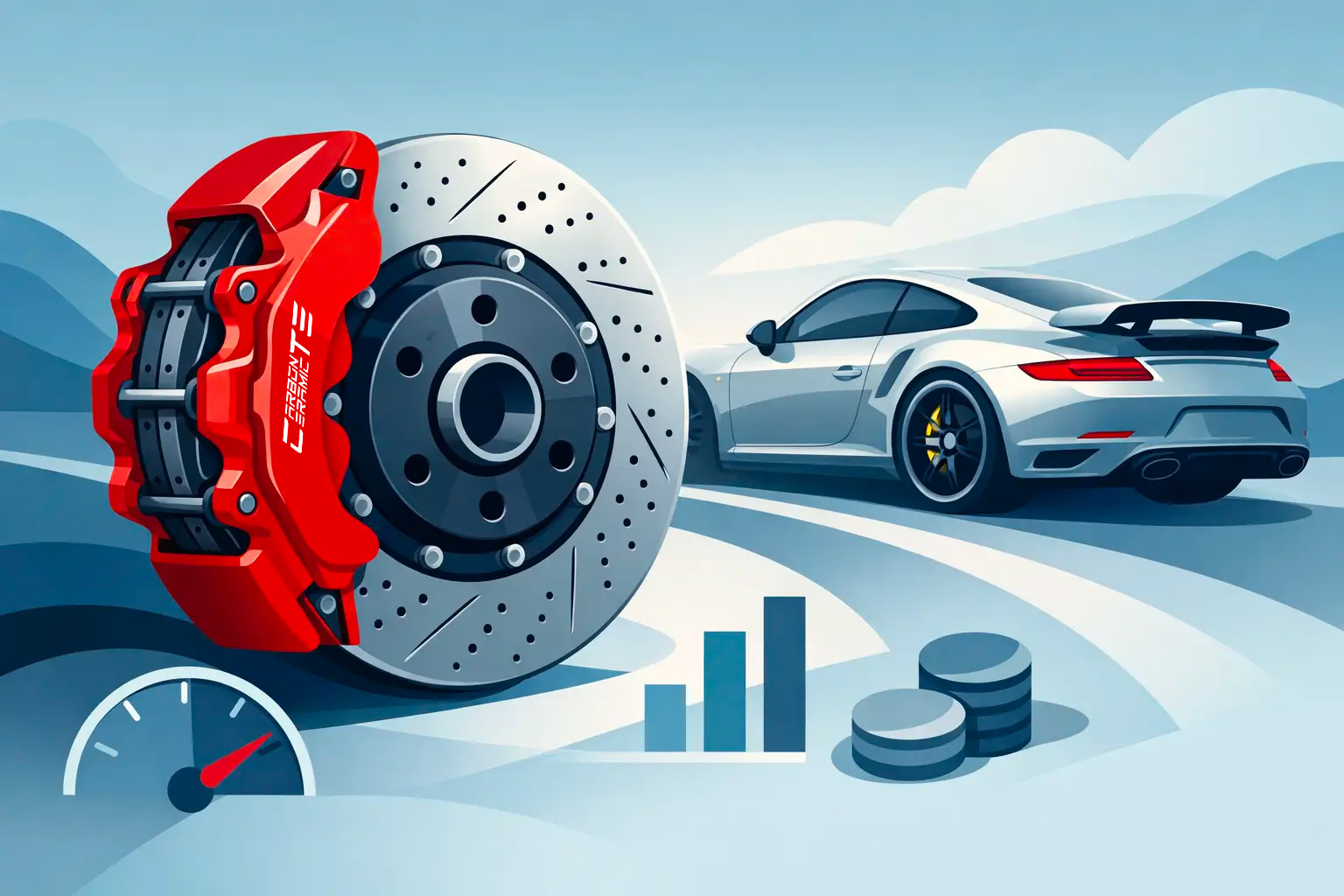
A Porsche can build speed far faster than an inadequate brake system can safely erase it. The warning signs are familiar to performance workshops and serious drivers: a longer pedal after repeated hard stops, vibration under load, fading confidence on a mountain road, or a track session cut short by heat. A properly engineered Porsche brake upgrade is not cosmetic hardware behind a wheel. It is a system decision that protects control when braking demand is highest.
For Porsche owners, builders, and aftermarket professionals, the right answer depends on vehicle weight, wheel fitment, driving environment, and the temperature the system must manage. Bigger components alone do not guarantee better braking. The objective is stable, repeatable deceleration with predictable pedal response, appropriate balance, and components that remain reliable after repeated thermal cycles.
Start With the Braking Problem, Not the Caliper Color
A road-driven Macan, a heavily modified 911 Turbo, and a track-focused Cayman do not ask the same thing of their brakes. Before selecting rotors, calipers, or pads, define the condition that creates the problem.
If the pedal becomes soft only after repeated high-speed braking, thermal capacity and fluid performance may be the immediate concern. If braking feels inconsistent from the first application, pad compound, rotor condition, tire grip, suspension geometry, or hydraulic issues may be involved. If the goal is sharper response and lower rotating mass without regular track use, a lighter carbon ceramic system may be more relevant than an oversized race package.
This distinction matters because brakes work as part of the entire chassis. Tires establish the available grip. Suspension controls contact patch behavior. Brake bias influences stability. The driver needs a predictable pedal to use all of it. Installing the largest available kit without verifying the vehicle's intended use can create unnecessary cost, wheel-clearance problems, or an overly aggressive setup for street conditions.
What a Porsche Brake Upgrade Should Improve
A complete brake system should improve more than peak stopping force. At the tire's limit, braking distance is heavily influenced by available grip and vehicle dynamics. The stronger case for a performance upgrade is consistency: the ability to deliver the same controlled response on the fifth hard stop as on the first.
Thermal resistance under repeated load
Heat is the central enemy of sustained braking performance. During repeated deceleration, rotor and pad temperatures rise rapidly. Excessive heat can change pad friction characteristics, boil degraded fluid, accelerate wear, and contribute to rotor cracking or distortion in poorly matched systems.
Carbon ceramic rotors are valued for their thermal resistance and stability under demanding use. Their material construction is designed to tolerate severe temperature exposure while helping the system retain predictable performance. This makes them particularly relevant for high-powered Porsche applications, heavy premium vehicles, and drivers who regularly encounter sustained braking loads.
Thermal performance still depends on the complete package. Rotor design, caliper stiffness, pad material, fluid specification, cooling airflow, and installation quality all affect the result. A rotor cannot compensate for an unsuitable pad or a neglected hydraulic system.
Lower unsprung and rotating mass
Carbon ceramic systems can significantly reduce rotor weight compared with conventional iron alternatives. That reduction matters beyond the brake pedal. Less unsprung mass allows the suspension to respond more effectively to road changes, while less rotating mass can improve the vehicle's sense of responsiveness.
The benefit is especially relevant on Porsche platforms where steering precision and chassis communication are part of the ownership experience. A lightweight braking system supports those characteristics rather than adding mass at each corner.
Firmer, more controlled pedal feel
A rigid monobloc caliper helps maintain consistent clamping behavior under pressure. When paired with correctly sized pistons, high-quality pads, and a matched rotor, it can give the driver more direct feedback during threshold braking.
That does not mean every driver should pursue the most aggressive pad compound available. Race-oriented pads can require heat to perform at their best, may create more noise and dust, and can be less pleasant during daily driving. Street, spirited-road, and circuit use call for different friction behavior. The correct setup is the one that remains controlled in its actual operating range.
Choose a Complete Porsche Brake Upgrade System
A brake conversion should be engineered as a matched assembly, not assembled from isolated components selected by appearance or catalog size. A proper kit considers caliper piston area, rotor diameter and thickness, disc offset, mounting bracket geometry, pad sweep, brake-line routing, wheel clearance, and front-to-rear balance.
For professional installers, vehicle-specific fitment is not a minor detail. Porsche platforms vary by generation, trim, factory brake option, wheel design, and electronic brake-control calibration. Even where a kit physically mounts, the wheel barrel and spoke profile must provide adequate clearance around the caliper. Confirm the supplied fitment data before ordering, and use a wheel template where applicable.
A complete system should normally include the calipers, carbon ceramic rotors, mounting hardware, brackets, brake lines where required, and pads matched to the application. This reduces the risk of mismatched interfaces and gives workshops a clearer installation and support path. It also makes it easier to validate the finished vehicle before release.
Carbon Ceramic or Iron: Make the Trade-Off Honestly
Carbon ceramic brakes have real advantages, but they are not automatically the right choice for every Porsche owner. A quality iron rotor and track-capable pad package can be a practical solution for a vehicle that sees frequent circuit use, consumable replacement, and tight operating budgets. Iron systems often offer lower replacement costs and broad pad availability.
Carbon ceramic systems justify their position when the customer values lower weight, high thermal resistance, corrosion resistance, premium appearance, and long-term durability under suitable use. They are particularly compelling for high-end road cars, performance builds where unsprung mass matters, and drivers who want racing-grade braking capability without accepting a heavy conventional setup.
The trade-off is initial investment and the need for disciplined fitment. Carbon ceramic components must be handled, installed, and bedded according to the manufacturer's requirements. Pads must be compatible with the rotor material. Damaged components should never be treated as a cosmetic issue or returned to service without inspection.
Installation Details That Protect Performance
The installation standard is as important as the component specification. Clean hub faces are essential. Corrosion, debris, or uneven mounting surfaces can create rotor runout and lead to vibration complaints that are wrongly blamed on the new brake kit. Torque fasteners to the specified values, use the correct hardware, and inspect line routing through full steering and suspension travel.
After installation, bleed the system carefully with fluid suited to the intended temperature range. Verify pedal firmness, check for leaks, confirm wheel clearance, and complete a controlled bedding procedure. Bedding establishes a stable transfer layer between pad and rotor and is necessary for predictable friction behavior.
For workshop customers, document the installation, wheel specification, pad choice, and bedding instructions. These details support future service and help prevent a track-oriented package from being judged by cold daily-commute behavior, or a street compound from being pushed beyond its temperature capability.
Manufacturing Control Matters in Performance Brakes
Brake hardware is a safety-critical assembly. Material consistency, machining accuracy, rotor construction, caliper tolerances, and quality control affect what the driver feels when the car is traveling at speed. This is why buyers should look beyond surface finish and oversized claims.
CCYS manufactures 90% of its braking products in-house, covering R&D, precision machining, and quality management. Backed by IATF 16949 and ISO 9001 certifications, this production control supports consistent execution across carbon ceramic brake kits, rotors, monobloc calipers, pads, and supporting components. For distributors and performance workshops, that means access to complete, vehicle-focused systems with manufacturer warranty coverage and technical support rather than a collection of unverified parts.
A Porsche deserves braking hardware engineered for the same discipline that makes the chassis capable in the first place. Specify the system around the real duty cycle, verify every fitment detail, and give the driver one less reason to hesitate when the braking zone arrives.