

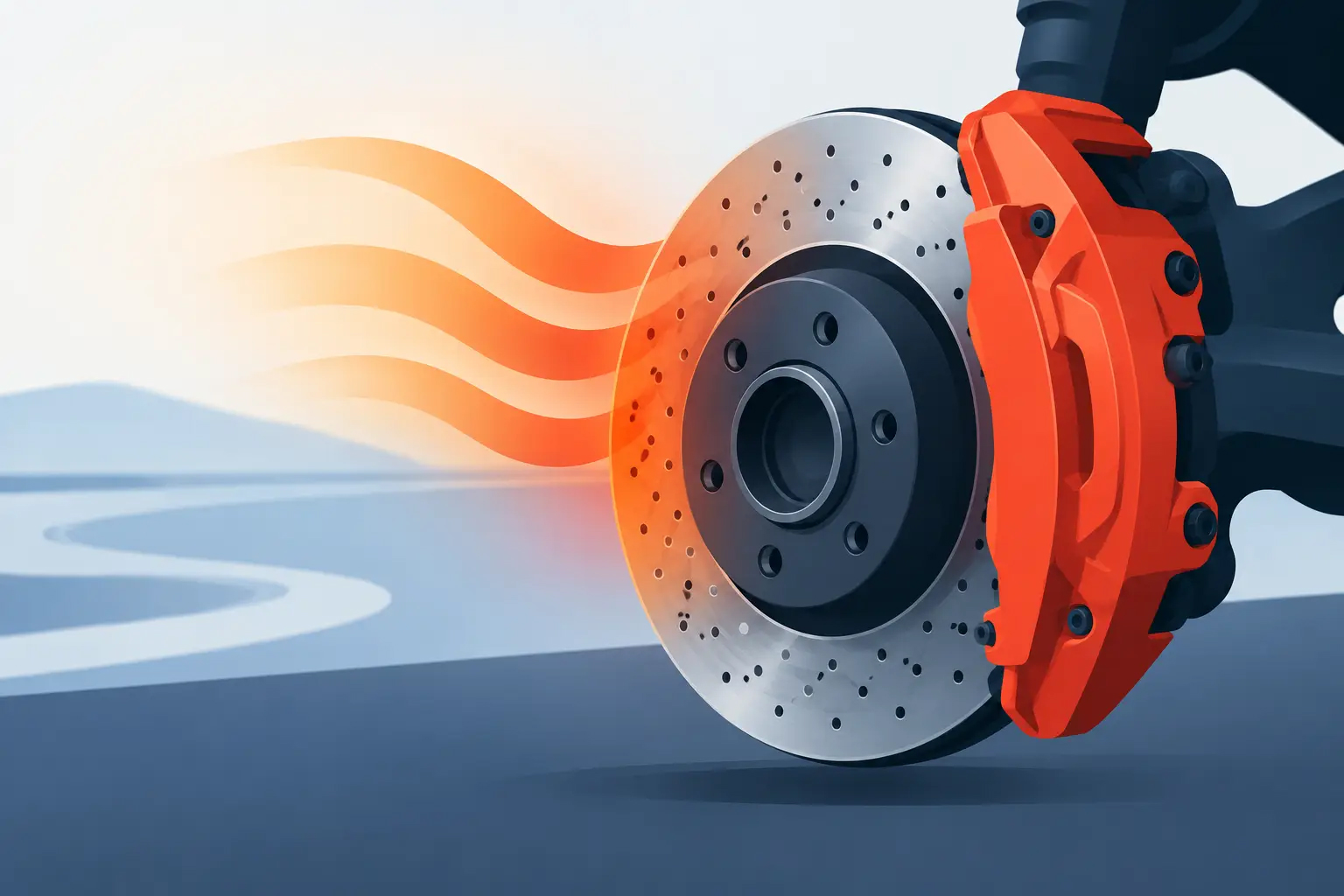
A brake pedal that goes long after repeated hard stops is not an inconvenience. It is a warning that heat, force, and component control are no longer working together. Brake manufacturing determines whether a system remains predictable when a heavy performance vehicle enters the braking zone at speed, carries passengers downhill, or completes lap after lap without fade.
For distributors, workshops, and serious vehicle owners, the question is not simply whether a brake kit looks substantial behind the wheel. The real question is whether every part - rotor, caliper, pad, bracket, hub interface, and hardware - has been engineered and produced as one system. That is where racing-grade braking separates itself from generic upgrades.
Brake Manufacturing Is System Engineering
A high-performance brake system is only as capable as its weakest interface. A large rotor cannot compensate for an imprecise caliper mount. High-friction pads cannot correct poor piston control. A lightweight disc loses its value if the rest of the assembly introduces vibration, uneven loading, or inconsistent fitment.
Effective brake manufacturing starts with the operating target. Is the application a Tesla with significant vehicle mass and instant torque? A Porsche used for high-speed road driving and track days? A Nissan GT-R that needs repeated stopping force without pedal degradation? Each platform creates different demands for thermal capacity, clamping force, pedal feel, wheel clearance, and mounting geometry.
The strongest manufacturers engineer around the complete braking event. They calculate how heat moves through the disc, how the caliper body resists deflection, how pad area affects pressure distribution, and how the hat, bracket, and fasteners preserve alignment under load. This work is not cosmetic. It determines whether braking performance remains controlled when conditions become severe.
Why material control matters
Carbon ceramic braking systems are valued for their low weight, high thermal resistance, and ability to perform in demanding environments. But the material alone is not a guarantee of performance. The rotor structure, friction surface, cooling design, machining precision, and final inspection all influence how it performs over time.
A carbon ceramic disc must be made to handle aggressive thermal cycles while maintaining a stable friction relationship with the selected pad compound. The goal is not simply to withstand high temperatures. It is to manage those temperatures without creating the fade, judder, inconsistent bite, or accelerated wear that drivers and workshops do not accept.
Material selection also involves trade-offs. A system optimized for maximum track heat capacity may require different pad behavior than one intended for quiet, confident street performance. The correct solution depends on the vehicle, use case, and driver expectations. Professional suppliers should be able to explain that distinction rather than treating every high-performance application as identical.
Precision Machining Protects Fitment and Feel
Performance braking is installed at the wheel, where even small dimensional errors can create major problems. Rotor offset affects caliper centering. Mounting surfaces affect runout. Caliper bracket tolerances affect pad sweep. Hardware quality affects long-term retention under repeated vibration and heat.
This is why precision machining is central to brake manufacturing. Components must be produced to the intended geometry, then verified before they become part of a vehicle-specific kit. A brake system designed for a BMW, Jaguar, Land Rover, Toyota Supra, or Defender cannot rely on approximate fitment. The installation must account for hub dimensions, wheel clearance, mounting locations, sensor requirements, and the practical needs of the workshop performing the work.
Monobloc calipers illustrate the value of controlled machining. A properly engineered caliper body resists flex when hydraulic pressure rises, helping maintain more consistent pad contact and pedal response. Piston bore accuracy, seal grooves, bridge stiffness, fluid passages, and pad retention details all matter. These are not visible from a product photo, but they are felt every time the driver brakes from speed.
The same principle applies to supporting chassis components. Control arms, stabilizer links, ball joints, tie-rod ends, rack ends, and bushings influence how loads reach the tire contact patch. A braking upgrade is most effective when the vehicle can maintain stable geometry and predictable control under deceleration.
In-House Production Creates Accountability
Outsourcing can be useful for certain processes, but fragmented production creates more handoffs, more variation, and more opportunities for a design intent to be lost. For performance-braking buyers, the practical issue is accountability. When a fitment question arises or a component must be refined, who owns the engineering decision?
CCYS completes 90% of production in-house, spanning research and development, precision machining, and quality management. That level of control supports faster technical feedback, closer process oversight, and stronger consistency from prototype through production. It also allows brake components to be evaluated as part of a complete system rather than as unrelated catalog parts.
For distributors and tuning shops, this matters beyond the initial sale. A supplier with direct production control is better positioned to support product knowledge, application development, replacement requirements, and quality follow-up. A manufacturer warranty carries more weight when the manufacturer has visibility into how the product was built and tested.
Certification is a production discipline
IATF 16949 and ISO 9001 certification do not automatically make a brake system suitable for every form of motorsport or every customer requirement. What they demonstrate is a structured approach to quality management, traceability, process control, and continual improvement. Those disciplines are particularly valuable when components are made for premium and high-performance vehicles where fitment and reliability expectations are high.
The best production culture treats inspection as confirmation, not rescue. Quality should be built into material handling, machining operations, assembly procedures, and final verification. Waiting until the end of the line to find a problem is expensive. Preventing it through controlled processes protects the installer, the distributor, and the driver.
What Professional Buyers Should Evaluate
When sourcing a brake kit or individual braking components, look beyond headline specifications. Rotor diameter, caliper piston count, and carbon ceramic construction are relevant, but they do not tell the full story. Ask whether the system has vehicle-specific engineering, what supporting hardware is included, and how the manufacturer manages component consistency.
A complete kit should address more than the obvious parts. Correct brackets, fasteners, brake lines where applicable, pad selection, rotor hats, and installation support can determine whether a workshop completes the job efficiently and whether the finished vehicle performs as intended. Piecing together components from unrelated sources may appear flexible, but it often transfers engineering risk to the installer.
It is also worth evaluating the supplier’s technical readiness. Can it discuss wheel clearance? Does it understand the difference between street, performance-road, and track requirements? Can it support applications across Porsche, Tesla, BMW, supercar, and other premium platforms? These questions reveal whether the seller is moving inventory or standing behind a braking system.
The Standard Is Confidence Under Load
Drivers do not measure braking confidence in product descriptions. They measure it when the vehicle decelerates hard, stays composed, and gives the same predictable response on the next stop. That confidence is built long before installation, through engineering decisions, material control, precise manufacturing, verified fitment, and disciplined quality management.
For performance workshops and distributors, choosing a manufacturer is therefore a decision about reputation as much as hardware. A system that performs under heat, fits correctly, and is supported by the people who made it protects the customer relationship. When braking is the final line between speed and consequence, manufacturing quality is not an added feature. It is the standard worth demanding.