

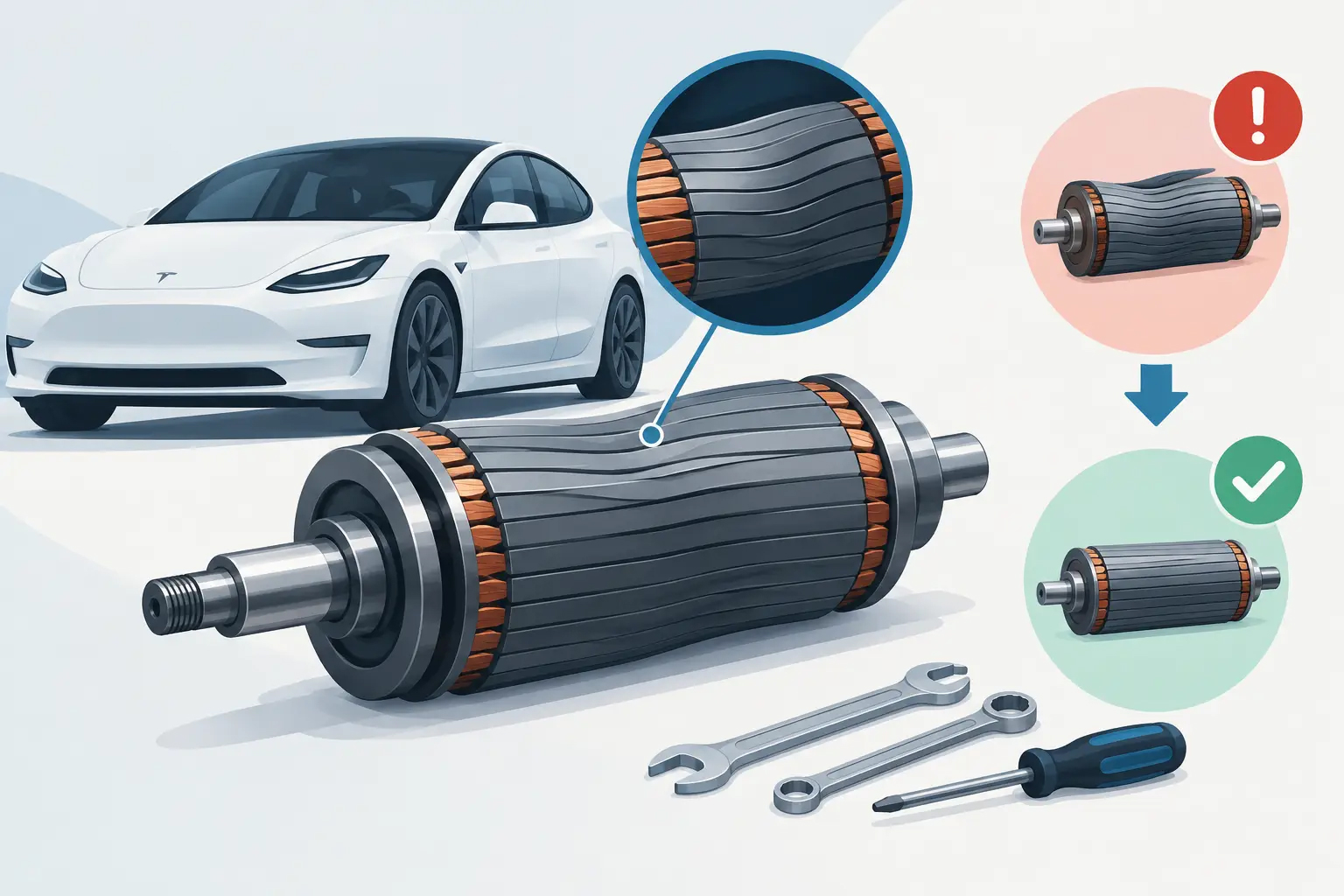
A brake pedal that pulses under hard deceleration is not a minor comfort issue. In a heavy, high-torque Tesla, vibration through the pedal or steering wheel can quickly undermine driver confidence and point to a brake system that needs disciplined inspection. Tesla rotor warping is the phrase most owners use, but the underlying cause is frequently more specific than a visibly bent brake disc.
For performance workshops and aftermarket distributors, the distinction matters. Replacing rotors without identifying the source of thickness variation, corrosion, runout, or caliper drag can return the vehicle to the customer with the same complaint waiting to reappear.
What Tesla Rotor Warping Usually Means
True rotor distortion can occur when a disc is exposed to extreme and uneven heat, then cooled unevenly. However, most brake pulsation diagnosed as warped rotors comes from disc thickness variation, commonly called DTV. This means the friction surface has small high and low areas around its circumference. As the pads sweep over those variations, hydraulic pressure changes and the driver feels a pulse through the brake pedal.
Uneven pad material transfer is a common cause. A rotor can develop patchy friction layers after repeated high-temperature stops, especially if the driver holds the vehicle stationary with firm brake pressure immediately after a severe stop. The pad remains clamped on a hot section of disc, transferring material unevenly. The resulting deposits can feel remarkably similar to a warped rotor.
Tesla applications add another variable: regenerative braking. Regeneration handles a large share of routine deceleration, which reduces friction-brake use in normal driving. That is efficient, but it can allow surface corrosion to form on iron rotors, particularly in humid climates, coastal regions, or vehicles that sit for extended periods. Light surface rust is normal and often clears with brake use. Deeper corrosion, pitting, or uneven rust buildup can create vibration, noise, and inconsistent braking response.
Why Teslas Can Develop Brake Vibration
Tesla vehicles are not uniquely prone to brake problems, but their operating characteristics change how the friction brakes age. Reduced rotor temperature and reduced pad sweeping during everyday driving can leave moisture and contaminants on the disc surface longer than they would on a conventional vehicle driven through dense stop-and-go traffic.
Vehicle mass is also relevant. Battery-electric vehicles carry substantial weight, and that mass must still be controlled whenever regeneration is limited, when the battery is cold or fully charged, during emergency stops, or under repeated high-speed braking. A spirited mountain descent, track session, or loaded highway drive can place major thermal demand on the friction brakes in a short period.
A stock system designed for ordinary road use may be entirely suitable for daily driving yet reach its thermal limits during repeated heavy stops. That does not automatically justify replacing every component with racing hardware. It does mean the rotor, pad compound, caliper condition, brake fluid, wheel fitment, and intended use should be evaluated as one system.
Heat Is Only One Part of the Diagnosis
A driver may report steering-wheel shake during braking, pedal pulsation, squeal, reduced bite, or a pulling sensation. These symptoms overlap, but they do not all point to rotor warping. Steering-wheel vibration is often felt most strongly from the front axle, while pedal pulsation may indicate disc thickness variation at either axle. A pull under braking can involve tire condition, suspension geometry, seized slide hardware, uneven pad friction, or caliper piston movement.
For that reason, visual inspection alone is not enough. A rotor can look clean and still have measurable thickness variation. Conversely, a rotor with surface discoloration may clean up after proper bedding and controlled use if measurements remain within specification.
How to Diagnose Tesla Rotor Warping Correctly
A professional inspection begins before parts are ordered. The workshop should road-test the vehicle where safe, identify the speed range and brake pressure that trigger the complaint, then inspect the complete braking and wheel-end assembly.
Rotor thickness must be measured at multiple points around the friction ring with a micrometer, not estimated by appearance. The results should be compared with the manufacturer’s minimum thickness and permitted variation. Lateral runout should be measured with a dial indicator after confirming that the hub face is clean and free of corrosion, debris, paint buildup, or damage.
Hub condition is frequently overlooked. A new rotor installed against an unclean hub can inherit runout from the mounting surface. Over time, that runout can contribute to thickness variation as the pads contact the disc unevenly. Wheel bolts should also be tightened in the correct sequence and to the specified torque. Uneven clamp load can distort the rotor hat area enough to complicate diagnosis.
The caliper and pads need equal attention. Check for tapered pad wear, binding guide pins where applicable, damaged hardware, seized pistons, torn boots, and uneven retraction. On a Tesla that receives little friction-brake use, caliper movement and pad contact surfaces deserve careful service rather than a quick rotor replacement.
When Resurfacing Is Not the Answer
Machining a rotor may remove light deposits or correct limited thickness variation, but it is not always the best repair. The remaining disc thickness must stay above the specified minimum, and the rotor must retain enough thermal capacity for its intended duty. On performance-driven vehicles, removing material can reduce the margin available during repeated high-energy braking.
Replacement is generally the sounder option when there is deep corrosion, cracking, heat checking, substantial runout, severe DTV, or insufficient remaining thickness. Pads should usually be replaced or properly assessed at the same time. Installing new rotors with contaminated or unevenly worn pads can transfer the original problem to the new friction surfaces.
Preventing Repeat Rotor Problems
The most effective prevention is controlled friction-brake use and correct maintenance. Tesla owners who rely heavily on regeneration should periodically perform several firm, safe decelerations to clean the rotor faces and bring the friction brakes into normal operating range. This is not a substitute for a bedding procedure or a repair, but it can help reduce light corrosion and keep the system active.
After aggressive braking, avoid sitting stationary with heavy pedal pressure if conditions permit. Let the vehicle roll briefly or allow the brakes to cool before extended parking. This reduces the chance of concentrated pad transfer on a heat-soaked disc.
For workshop customers who drive hard, attend track days, tow, or run high-output Tesla configurations, the brake package should match the duty cycle. Higher-temperature pads can improve fade resistance but may produce more noise, dust, or reduced cold bite. Larger rotors and multi-piston calipers can improve thermal capacity and pedal consistency, but only when the kit is engineered for the vehicle’s hub, wheel clearance, brake balance, and electronic control environment.
Carbon ceramic systems offer meaningful advantages in the right application: lower unsprung weight, high thermal resistance, and strong durability under repeated heat cycles. They are not a universal cure for every pedal pulse. Correct installation, compatible pad selection, and verified fitment remain essential. A complete vehicle-specific system is safer than mixing unrelated calipers, brackets, discs, and pad compounds.
A Performance Brake Upgrade Should Solve a Defined Problem
For distributors and tuning shops, the strongest recommendation is based on evidence, not the word warped. Measure the existing system, identify whether the issue is corrosion, deposits, DTV, runout, or mechanical drag, and ask how the vehicle is actually driven. A commuter Tesla in a wet climate needs a different solution from a high-power vehicle used for repeated high-speed braking.
CCYS develops complete carbon ceramic brake systems with in-house control over critical production stages, vehicle-specific engineering, and quality processes aligned with IATF 16949 and ISO 9001 standards. For qualified performance applications, the goal is not simply a larger-looking brake package. It is stable stopping force, controlled heat, reduced unsprung mass, and confidence when the next braking zone arrives faster than expected.
Treat brake vibration as a diagnostic signal, not a parts-shopping shortcut. The right measurements and a properly matched brake system give Tesla drivers something more valuable than a temporary smooth pedal: dependable braking when regenerative assistance is no longer enough.