

Street or Track?
The Truth Behind
Next-Gen CCM
A comprehensive technical comparison between Gen 1 CCB/CCM and CTE Next-Gen T700 Carbon Ceramic brakes — covering oxidation resistance, fiber grade, 3D matrix construction, and Reactive Melt Infiltration technology.
Street Use: The Ultimate “Lifetime” Solution
While Carbon Ceramic Brakes are celebrated as the pinnacle of track performance, they truly shine on high-performance street cars. Under standard driving temperatures, oxidation is virtually non-existent — making CTE Next-Gen CCM the last brake disc you will ever need to buy.
- Unmatched Longevity
Unlike iron discs that suffer physical frictional wear, CTE CCM discs do not “wear out” in the traditional sense. When paired with correct non-metallic pads, they are designed to last the entire lifetime of the vehicle.
- Pristine Aesthetics
Virtually zero brake dust — keeping your wheels showroom-clean even after spirited drives.
- The “Cold / Wet” Myth Corrected
Early Gen 1 CCB systems suffered from poor initial bite in cold or wet conditions. CTE’s Next-Gen 3D matrix construction delivers superior thermal conductivity, ensuring immediate, linear braking response from the very first application.
⚠️ A Note on Refurbishing: We advise extreme caution regarding “resurfacing” services. Adding a new Silicon Carbide layer often weakens the structural integrity of the carbon core. At CTE, we believe safety should never be compromised for a “shiny” surface.
Track Use: Winning the War Against Oxidation
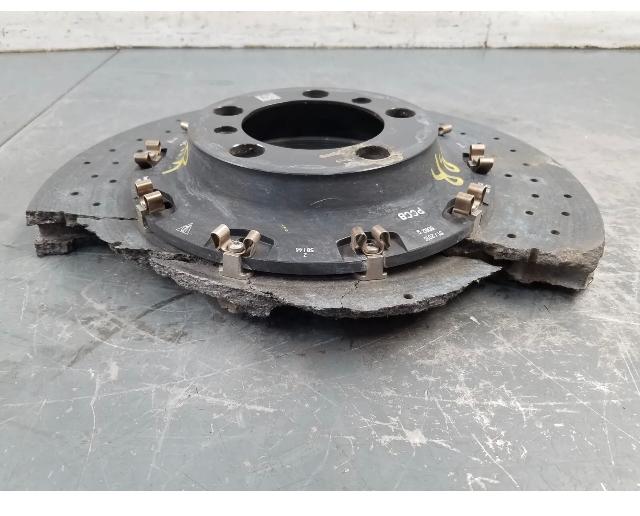
On track, disc temperatures regularly exceed 800°C, triggering Carbon Oxidation — the vaporization of the carbon matrix itself. This is the primary reason OEM short-fiber discs degrade so rapidly under sustained track stress. CTE Racing CCMs dramatically reduce this oxidation rate, enabling professional-level performance without the constant fear of catastrophic or costly disc failure.
The T700 continuous fiber architecture, combined with CTE’s proprietary Reactive Melt Infiltration process, seals the internal carbon structure against oxygen ingress — the root cause of in-service oxidation degradation.
Why CTE Next-Gen Leads the Market
CTE has leapfrogged traditional production methods to establish a new global standard in carbon ceramic braking technology — built on three technical pillars.
1. T700 Grade Carbon: Aerospace Excellence
While most manufacturers — including several prominent suppliers — utilise T300-grade carbon, CTE exclusively uses T700-grade carbon — a material specification reserved for military and commercial aerospace applications. T700 is 40% stronger than T300 and has an oxidation rate less than half that of T300-grade fiber, directly translating to longer disc service life under track conditions.
2. 3D Continuous Fiber Matrix
Unlike discontinuous “short-fiber” discs found in OEM Brembo/SGL systems, CTE discs are woven from continuous T700s fibers into a multi-dimensional 3D needle-punched matrix. This architecture provides isotropic structural integrity, superior delamination resistance, and dramatically improved heat dissipation across the full disc cross-section.
3. Precision Siliconization — Reactive Melt Infiltration (RMI)
CTE’s proprietary Reactive Melt Infiltration (RMI) process — also known as Liquid Silicon Infiltration (LSI) — infiltrates molten silicon into the C/C preform at 1500°C. Silicon reacts with free carbon in-situ to form Silicon Carbide (SiC), eliminating air pockets and micro-fractures throughout the disc core and permanently blocking oxygen ingress pathways.
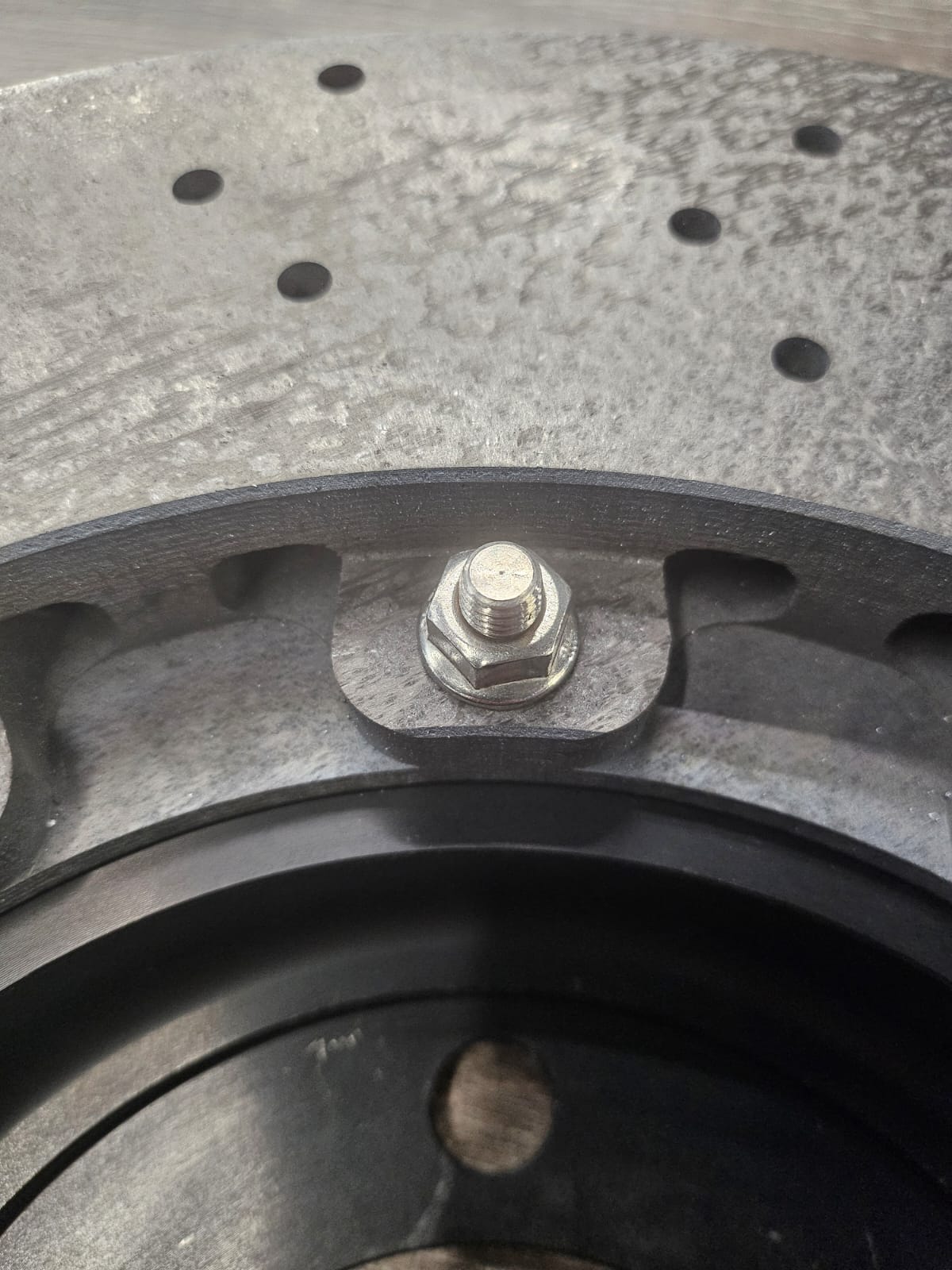
CTE T700 Continuous Fibre
100% uniform 3D matrix structure. Zero defects, zero air pockets, zero micro-fractures. Oxidation rate <50% of T300.
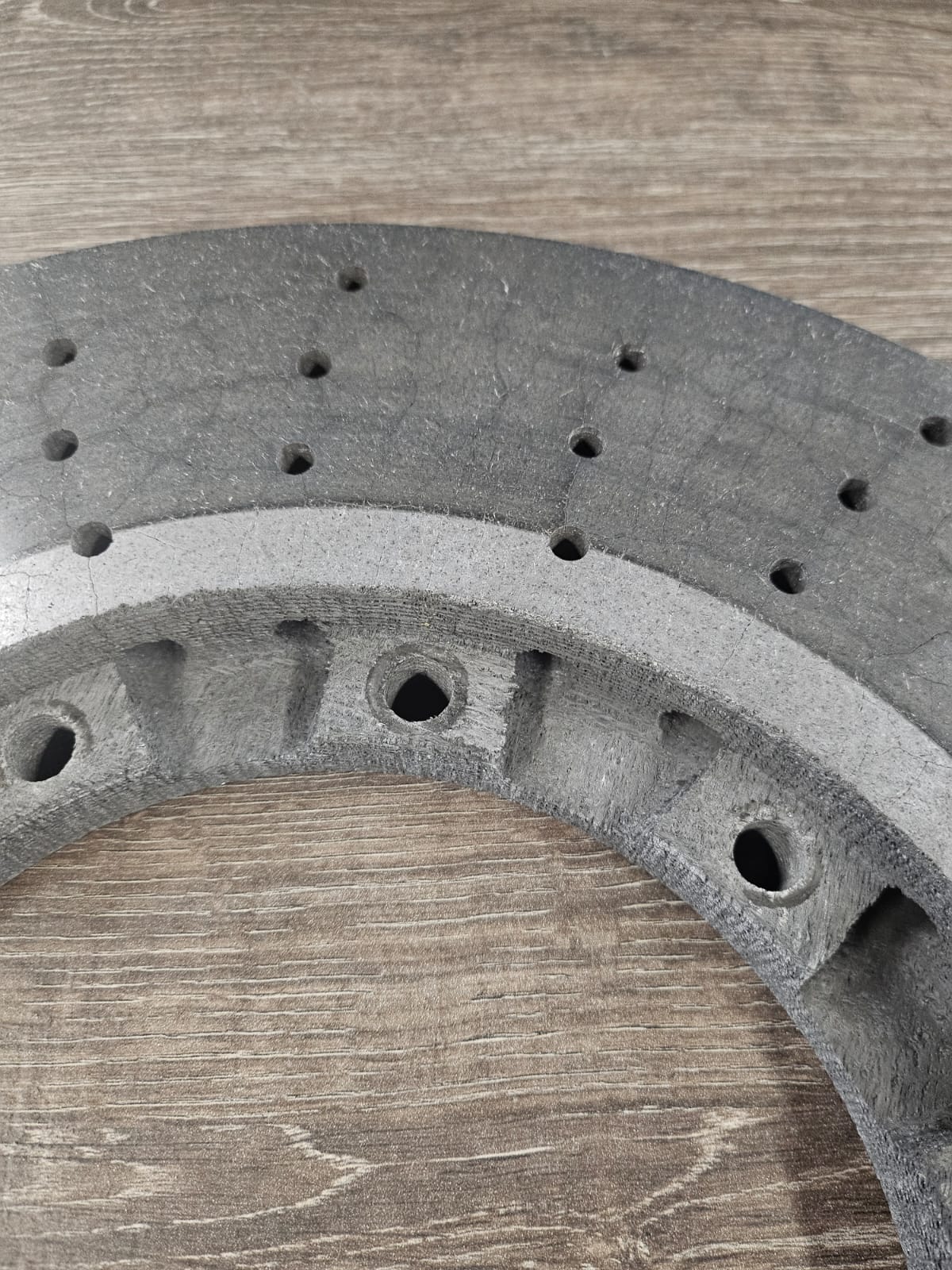
T300 Grade Comparison
Surface cracks and micro-fractures common in T300 short-fiber discs — oxygen ingress pathways that accelerate core oxidation under track temperatures.
Street or Track?
With CTE Next-Gen,
You No Longer Choose.
Whether it’s dustless street luxury or punishing race-condition thermal cycles, T700 technology delivers uncompromised performance at both extremes.
100% Uniform Structure. Zero Defects. Maximum Performance.
Frequently Asked Questions
- Are carbon ceramic brake discs suitable for everyday street use?
- Yes. Under standard street driving temperatures, carbon oxidation is virtually non-existent. CTE Next-Gen C/SiC discs paired with correct non-metallic pads are designed to last the entire lifetime of the vehicle, produce near-zero brake dust, and deliver immediate braking response from a cold start — outperforming older Gen 1 CCB systems.
- Why do OEM carbon ceramic brakes fail on track?
- Track temperatures regularly exceed 800°C, triggering carbon oxidation — the vaporization of the carbon matrix. OEM discs using T300-grade discontinuous (short) fibers have an oxidation rate more than double that of T700 continuous fiber discs, causing rapid structural degradation under sustained high-temperature cycling.
- What is the difference between T700 and T300 carbon fiber in brake discs?
- T700-grade carbon fiber is 40% stronger than T300 and has an oxidation rate less than half that of T300. CTE exclusively uses T700-grade continuous (long) fiber in a 3D multi-directional matrix. Most OEM and market-alternative manufacturers use T300-grade discontinuous (chopped) fiber, which is significantly more susceptible to high-temperature degradation.
- What is Reactive Melt Infiltration (RMI) in carbon ceramic brake manufacturing?
- RMI (also called Liquid Silicon Infiltration / LSI) infiltrates molten silicon into the Carbon/Carbon preform at 1500°C. The silicon reacts with free carbon in-situ to form Silicon Carbide (SiC), eliminating air pockets and micro-fractures throughout the disc core — permanently blocking the oxygen ingress pathways responsible for in-service oxidation.
- Is it safe to resurface or refurbish a carbon ceramic brake disc?
- CTE advises extreme caution. Applying a new Silicon Carbide layer over an aged disc can compromise the structural integrity of the carbon core. For safety-critical brake components, replacement with a verified new disc is strongly recommended over refurbishment services.