

CTE Carbon | CTERACING | CCYS Group
CTE Carbon Continuous 3D Carbon-Fiber Carbon Ceramic Brake Discs (CCM)
Four-Tier Product Lineup and Engineering Specifications
CTE Carbon and CTERACING are the high-performance carbon ceramic matrix (CCM) brake brands of CCYS Group (founded in 1973). Every disc is built on a continuous 3D carbon-fiber reinforced silicon carbide (SiC) matrix, with four clearly defined tiers matched to thermal loads from daily commuting to top-level endurance racing.
vs. chopped-fiber CCM discs
vs. same-size grey cast iron discs
baseline for the full range
Racing / CTE-Ultra
CTE Carbon CCM tiers at a glance
- What it is
- Carbon ceramic brake discs with a continuous 3D carbon-fiber reinforced silicon carbide (SiC) matrix, available in four tiers: Street (CCS), Sport, Racing and CTE-Ultra.
- How to choose
- Street for daily driving and OEM replacement; Sport for mountain roads and track days; Racing for competition and endurance racing; CTE-Ultra for hypercars and factory teams.
- Shared engineering
- Stainless steel bobbins and a forged A6061/A6082 aluminum bell, eliminating the galvanic corrosion and high-temperature galling risks of titanium hardware.
- Brake pads
- Every tier has a dedicated CCM pad compound; Racing and CTE-Ultra come standard with high-strength SAPH590 steel backing plates.
- Manufacturer
- CCYS Group, founded in 1973, Taiwan.
Four tiers for four thermal loads.
From direct OEM replacement to factory-team endurance racing, choose the CCM tier that fits your use case and operating temperature.
Street (CCS)
Carbon Ceramic Street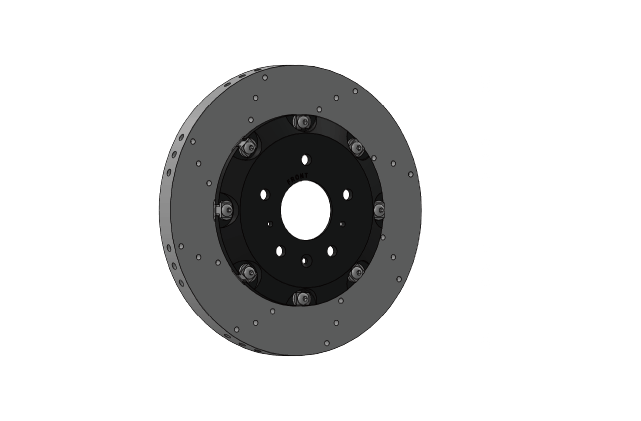
Direct OEM replacement, daily commuting and long-distance GT cruising. Linear braking force even at 0°C, with support for the integrated Drum-in-Hat EPB.
Explore StreetSport
Street and track-day all-rounder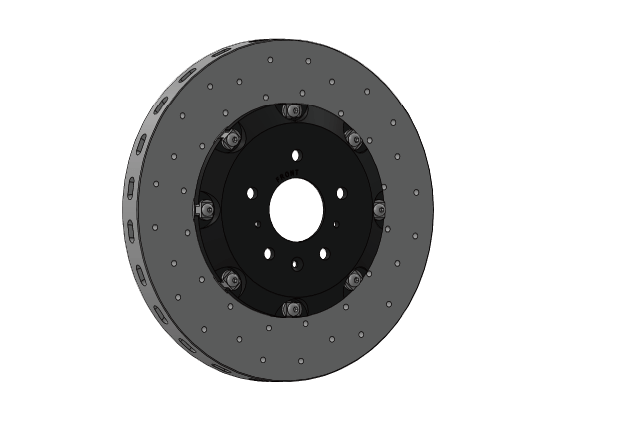
High-performance road cars, spirited mountain driving and HPDE track days. Balances cold-weather safety with stable friction at high temperature.
Explore SportRacing
Pure competition and endurance racing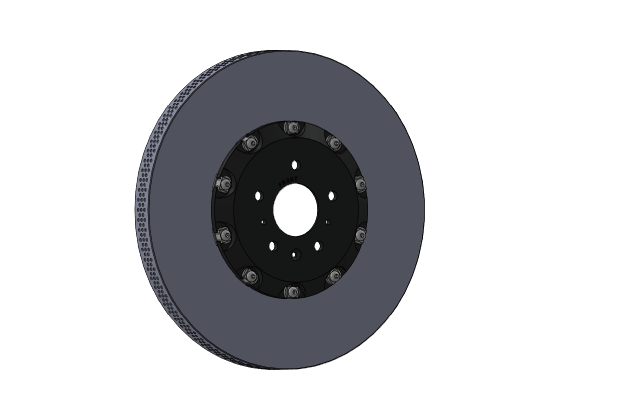
Sprint racing, Time Attack and endurance racing. Reinforced with an extreme-temperature anti-oxidation coating and paired with SAPH590 steel backing plates.
Explore RacingCTE-Ultra
Flagship hypercar and factory-team tier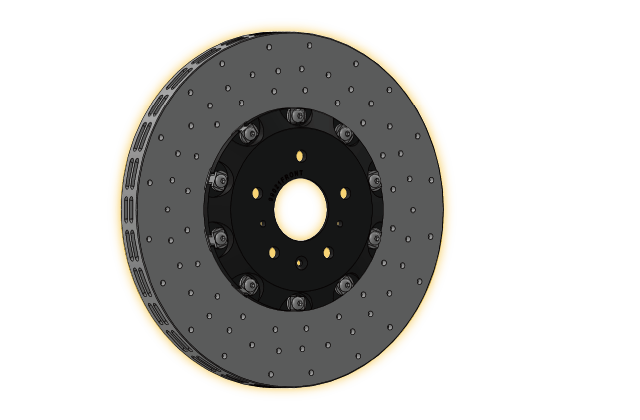
Top-level hypercars and professional factory teams. Highest fiber volume fraction and directional internal cooling vanes for the highest thermal conductivity.
Explore CTE-UltraEngineering Specifications of the Four CCM Tiers
Every two-piece floating assembly comes standard with precision-machined stainless steel bobbins and an aerospace-grade forged A6061/A6082 aluminum bell.
| Engineering parameter | Street (CCS)Carbon Ceramic Street | SportStreet and track-day all-rounder | RacingPure competition and endurance racing | CTE-UltraFlagship hypercar and factory-team tier |
|---|---|---|---|---|
| Core positioning and applications | Direct OEM replacement, daily commuting, high-speed GT cruising | High-performance road cars, spirited mountain driving, HPDE track days | Sprint racing, Time Attack, endurance racing | Top-level hypercars, professional factory teams, extreme sustained high thermal loads |
| Carbon-fiber reinforcement | Continuous 3D carbon-fiber SiC matrix (street-optimized density) | High-density continuous 3D carbon-fiber SiC matrix | Track-grade high-density continuous 3D carbon-fiber SiC matrix | Highest-density continuous 3D carbon-fiber SiC matrix (custom weave tension) |
| Max. continuous operating temperature | Up to 750°C (no thermal fade) | Above 850°C (zero deformation under sustained thermal cycling) | Above 950°C (enhanced extreme-temperature anti-oxidation coating) | 1,000°C class (highest thermal conductivity, lowest thermal fade) |
| Cold bite | Excellent (linear braking force even at 0°C) | Very good (balances cold-street safety with stable friction at high temperature) | Requires proper warm-up to reach the optimal operating window | Tuned for the high-temperature operating window, with dedicated high-conductivity vane geometry |
| Floating mechanism and bell material | Stainless steel bobbins + forged A6061/A6082 aluminum bell (supports OEM integrated Drum-in-Hat EPB) | Stainless steel bobbins + forged A6061/A6082 aluminum bell | Heavy-duty full-floating stainless steel bobbins + lightweight forged aluminum racing bell | Custom full-floating stainless steel bobbins + custom aerospace-grade forged aluminum bell |
| Recommended brake pads | Street low-dust CCM-specific compound | Sport dual-purpose high-friction CCM-specific compound | Racing high-friction competition compound (SAPH590 steel backing plate as standard) | CTE-Ultra dedicated endurance competition compound (SAPH590 steel backing plate as standard) |
| Expected service life | Over 100,000 km in normal street use (surface refinishing available) | Depends on track-use ratio; over 40% longer life than OEM chopped-fiber discs | Calculated from race thermal-load cycles, with excellent resistance to microcrack propagation | Optimized for the lowest mass loss over a single race or a full endurance season |
| Representative vehicle platforms | Porsche 911 (991/992), BMW M3/M4 (G80/G82), heavy high-performance EVs (e.g., VW ID. Buzz 380 mm upgrade kit) | Porsche 718 GT4 RS, BMW G82 M4, Toyota GR Yaris, Toyota GR86 | GT3 / GT4 race cars, spec-series race cars, dedicated track-day cars | Flagship hypercar OEM programs, top international endurance race teams |
Swipe left or right on phones and tablets to view the full comparison table.
Technical Details by Tier
Every tier is tuned independently for its own thermal load and use case.
Street (CCS): Direct OEM fit, effortless upgrade
Designed for owners who want the best everyday driving quality and a cost-effective direct replacement for OEM carbon ceramic discs (such as Porsche PCCB and BMW M Carbon Ceramic). Street (CCS) eliminates the brake dust and rain-related rust of cast iron discs, cuts unsprung weight by more than 50%, and noticeably improves suspension compliance and steering response. For vehicles with an electronic parking brake (EPB) on the rear axle, it offers an integrated Drum-in-Hat carbon ceramic rear disc that retains the full OEM parking function without an additional cast iron drum ring.
Unsprung weight reduction
Faster suspension response and better tire contact.
Sport: The sweet spot between mountain roads and track days
Developed for performance-car owners who regularly attend track days (HPDE) and drive hard on mountain roads. Sport raises the weave density of the continuous 3D carbon fiber and the uniformity of SiC infiltration. After repeated heavy-braking thermal cycles above 850°C, it still holds excellent flatness and a stable friction coefficient, while keeping good cold-street pedal feel and low noise.
Racing: Built for sustained high thermal loads and endurance racing
Tuned by the CTERACING motorsport team for wheel-to-wheel competition and endurance racing. Under prolonged temperatures above 900°C, the continuous 3D carbon-fiber network distributes thermal stress effectively and prevents surface delamination and thermal cracking. Paired with pads on high-strength SAPH590 steel backing plates, it withstands the shear forces of extreme brake pressure without deformation.
CTE-Ultra: Flagship braking engineering without compromise
CTE-Ultra represents the highest level of carbon ceramic manufacturing at CCYS Group. It uses the highest fiber volume fraction and custom directional cooling vanes to push heat dissipation to the limit, minimizing the mass loss of the carbon matrix caused by high-temperature oxidation. It is built for top-level hypercar platforms and professional factory teams.
Class operating temperature
Highest thermal conductivity, lowest thermal fade.
Carbon Ceramic Brake Engineering FAQ
The four technical questions we hear most before an upgrade.
Q1: What is the fundamental difference between continuous-fiber CCM discs and OEM chopped-fiber carbon ceramic discs?
Conclusion: Continuous 3D carbon-fiber construction is superior to chopped fiber in fracture toughness, thermal uniformity and service life. Conventional OEM carbon ceramic discs mostly use randomly pressed chopped carbon fibers only a few centimeters long. With no continuous load path between fibers, they are prone to localized oxidative spalling under extreme track temperatures and are harder to refinish. CTE Carbon infiltrates a complete continuous 3D carbon-fiber preform with silicon (SiC) through high-temperature vapor and liquid processes, forming a unified three-dimensional skeleton that raises impact fracture toughness by up to 3 times and improves heat conduction and dissipation.
Q2: Why do CTE Carbon floating carbon ceramic discs insist on stainless steel bobbins instead of titanium?
Conclusion: To completely eliminate thermal galling and dissimilar-metal galvanic corrosion. At operating temperatures above 850°C, titanium bobbins readily diffusion-bond to the aluminum bell or the ceramic body, which prevents the disc from expanding radially as it should and leads to judder or stress cracks. On wet or winter salted roads, the contact surfaces between carbon fiber and titanium or aluminum are also prone to galvanic corrosion. The entire CTE Carbon range specifies precision-machined stainless steel bobbins to maintain smooth floating clearance and long-term structural reliability across the full temperature range.
Q3: Can CTE Carbon CCM discs directly replace OEM Porsche PCCB or BMW M carbon ceramic discs?
Conclusion: Yes, and no change of the OEM calipers is required. CTE Carbon has developed direct OEM replacement CCM discs in OEM dimensions for models including the Porsche 911 (991 / 992 GT3, Turbo S), 718 GT4 RS and BMW M3 / M4 (G80 / G82, F80 / F82). Mounting holes, offset and electronic parking brake (EPB) mechanism all follow OEM geometry. For cars originally fitted with cast iron brakes, matching upgrade sizes are also available (for example, a 380x28 mm rear disc with integrated Drum-in-Hat carbon ceramic construction for the BMW G82 M4).
Q4: Where should thermal indicator paint be applied on a CCM disc?
Conclusion: Apply it only to the ground outer-diameter edge (OD edge) or the bell junction, and never on the friction surface. Thermal paint contains metal oxides and resin. If it is applied or runs onto the friction swept face, it penetrates the SiC micropores at high temperature and contaminates the pad friction layer, causing an abnormal drop in friction coefficient or brake judder. The correct method is to dab only 3 to 4 small spots on the OD edge for temperature monitoring.