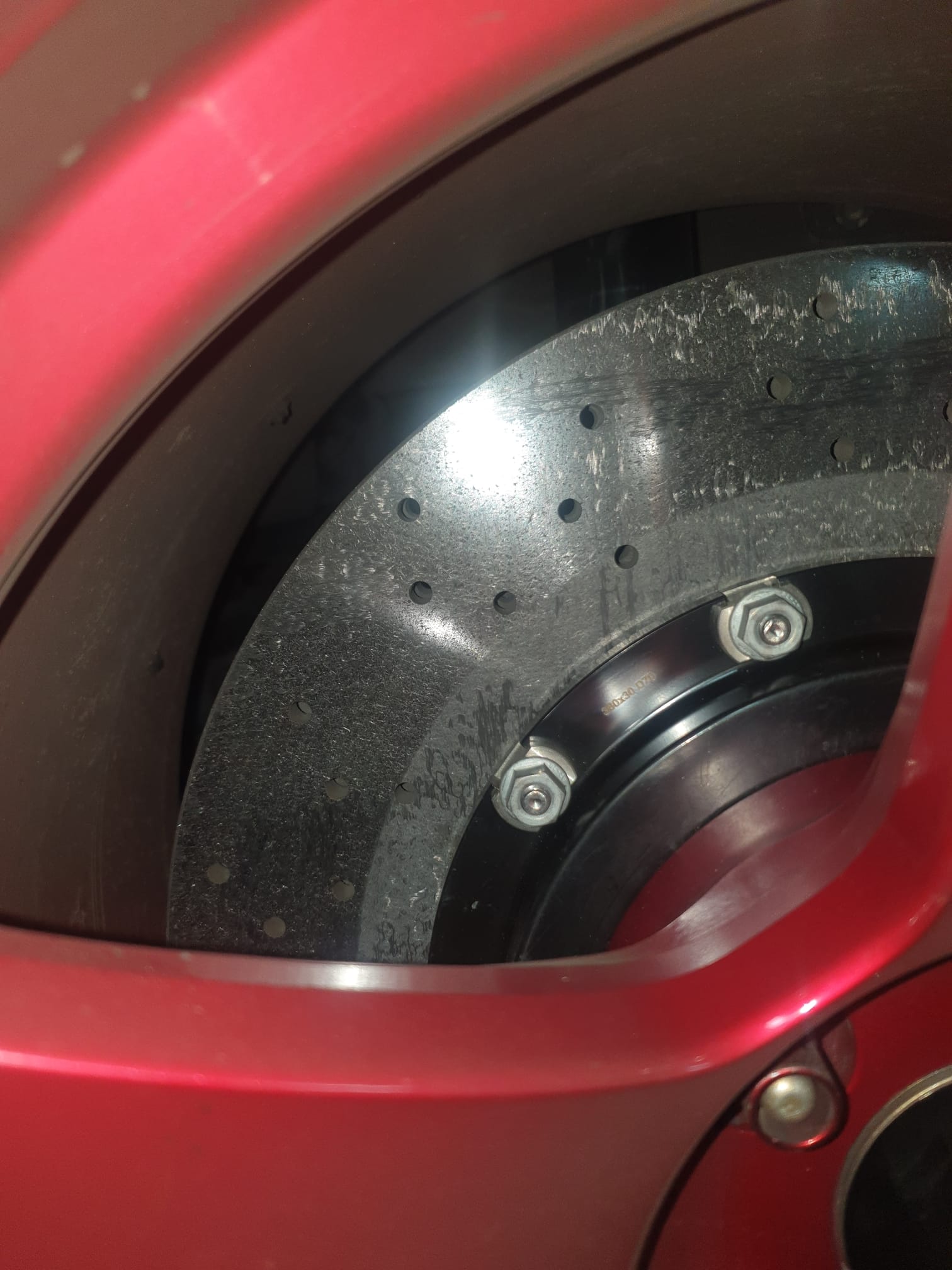
Professional Bedding-In Guide: Carbon Ceramic Brake Discs & Pads
⚠️ CRITICAL WARNING:
Proper bedding-in is mandatory to establish a transfer layer and prevent irreparable thermal damage. This procedure applies to all high-performance Carbon Ceramic (CCB/CCM) systems, regardless of brand.
Initial Requirement: Start with Cold Brakes (<40°C). Use only light braking until you reach a safe area to perform these procedures.
Method 1: The Gradual Approach (Patience Required)
Ideal for street-driven vehicles where a controlled, long-term heat cycle is preferred.
| Phase | Distance | Braking Intensity | Key Action |
|---|---|---|---|
| Step 1 | ~50 km | Light Force | Normal daily driving. |
| Step 2 | ~100 km | Light to Moderate | Gradual pressure increase. |
| Step 3 | ~100 km | Mixed (Light/Heavy) | Full thermal cycle coverage. |
| Step 4 | Final Cycle | Maximum (Emergency) | 100 km/h → 0 km/h (Repeat 3x). |
Method 2: High-Intensity Procedure (Rapid Bedding)
Designed for professional setups and track-ready performance.
| Step | Action (Speed Change) | Intensity | Reps | Cooling / Note |
|---|---|---|---|---|
| 01 | 80 km/h → 50 km/h | Light-Moderate | 16x | 10s intervals |
| 02 | Uninterrupted Cooling Drive: 3 km+ (Cool to <40°C) | Mandatory | ||
| 03 | 120 km/h → 30 km/h | Moderate-Heavy | 16x | 15s intervals |
| 04 | Uninterrupted Cooling Drive: 3 km+ (Cool to <40°C) | Mandatory | ||
| 05 | 130 km/h → 30 km/h | Heavy Force | 10x | 20s intervals |
| 06 | 100 km/h → 0 km/h | Maximum | 3x | Cool between stops |
Final Inspection: Confirming Your Bed-In Success
After completing the cycles, verify the disc surface for the following "As-New" standard:
- ✅ Consistent Metallic Shine: The surface should reflect light uniformly.
- ✅ Smooth Surface Texture: No tactile roughness or uneven pad deposits.
- ❌ Zero Micro-fractures: No visible cracks or surface peeling.